
International
ADVANCED AND APPLIED SCIENCES
EISSN: 2313-3724, Print ISSN: 2313-626X
Frequency: 12


Volume 12, Issue 12 (December 2025), Pages: 158-183

----------------------------------------------
Original Research Paper
Adaptive Bayesian survival modeling with the Chen-Burr XII distribution: Theory and application to censored COVID-19 data
Author(s):
Affiliation(s):
1Department of Statistics, Faculty of Sciences, King Abdulaziz University, Jeddah 21589, Saudi Arabia
2Department of Statistics, Faculty of Commerce (Girls’ Branch), Al-Azhar University, Cairo, Egypt
3Basic Sciences Department, Higher Institute of Marketing, Commerce and Information Systems (MCI), Cairo, Egypt
Full text

* Corresponding Author.
 Corresponding author's ORCID profile: https://orcid.org/0000-0002-7040-5623
Digital Object Identifier (DOI)
https://doi.org/10.21833/ijaas.2025.12.015
Abstract
This paper introduces an adaptive Type II progressive censoring strategy to improve Bayesian analysis of survival data in life-testing experiments. Using adaptively censored data, the Chen–Burr XII distribution is examined, and Bayesian estimators are derived for its parameters, reliability, hazard rate, and reversed hazard rate under squared error and linear exponential loss functions, assuming independent gamma priors. Credible intervals are constructed to measure parameter uncertainty, and the adaptive Metropolis algorithm is used for Bayesian computation. A simulation study based on four censoring schemes evaluates estimator performance in terms of bias and posterior risk. The results show that estimation efficiency increases with larger sample sizes, more observed failures, and smaller prior variance. Furthermore, the linear exponential loss function with a smaller shape parameter provides more efficient estimates than both larger shape parameters and the squared error loss function. The study also discusses broader methods for developing lifetime distributions, such as transformations and mixtures, and highlights the value of the competing risks approach for modeling events with multiple causes across various fields. The practical usefulness of the proposed methodology is demonstrated through the analysis of real censored lifetime data, including COVID-19 survival data.
© 2025 The Authors. Published by IASE.
This is an
Keywords
Adaptive progressive censoring, Bayesian estimation, Chen–Burr XII distribution, Survival analysis, Competing risks
Article history
Received 29 June 2025, Received in revised form 3 November 2025, Accepted 25 November 2025
Acknowledgment
No Acknowledgment.
Compliance with ethical standards
Conflict of interest: The author(s) declared no potential conflicts of interest with respect to the research, authorship, and/or publication of this article.
Citation:
Kalantan ZI and Salem HN (2025). Adaptive Bayesian survival modeling with the Chen-Burr XII distribution: Theory and application to censored COVID-19 data. International Journal of Advanced and Applied Sciences, 12(12): 158-183
Figures
Fig. 1 Fig. 2 Fig. 3 Fig. 4 Fig. 5 Fig. 6 Fig. 7 Fig. 8 Fig. 9 Fig. 10
Fig. 11 Fig. 12 Fig. 13 Fig. 14 Fig. 15 Fig. 16 Fig. 17 Fig. 18
Tables
Table 1 Table 2 Table 3 Table 4 Table 5 Table 6 Table 7 Table 8 Table 9


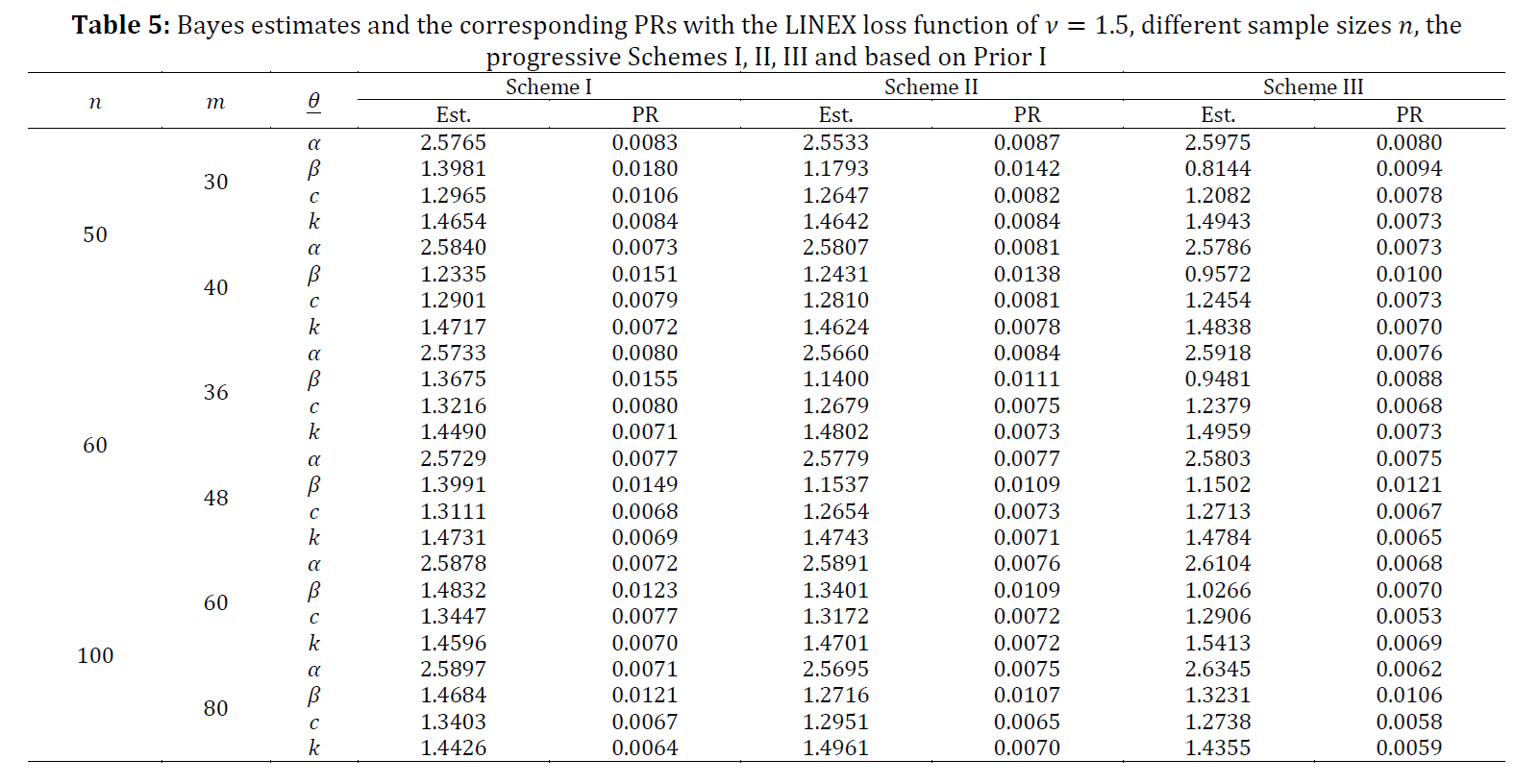

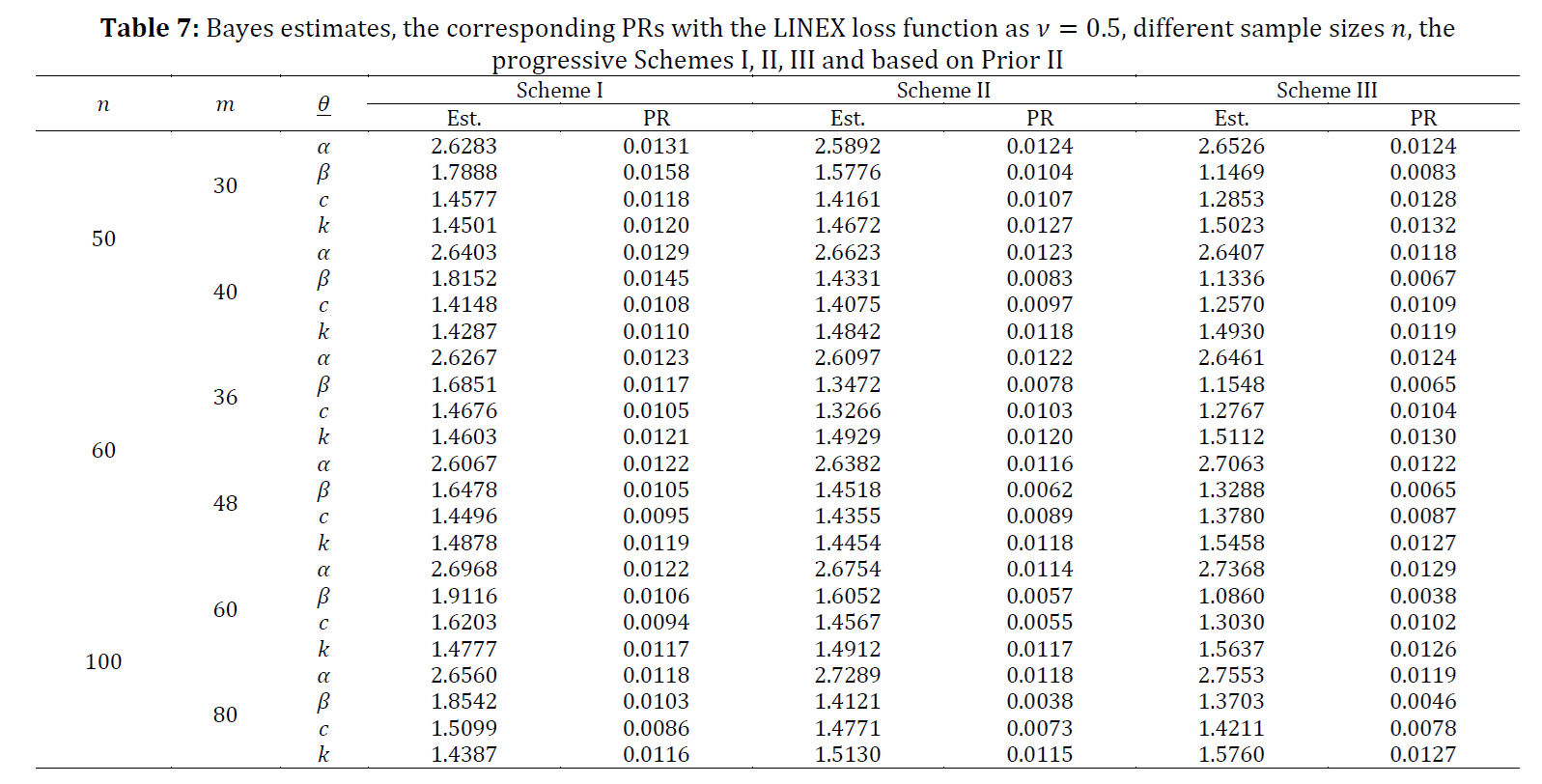
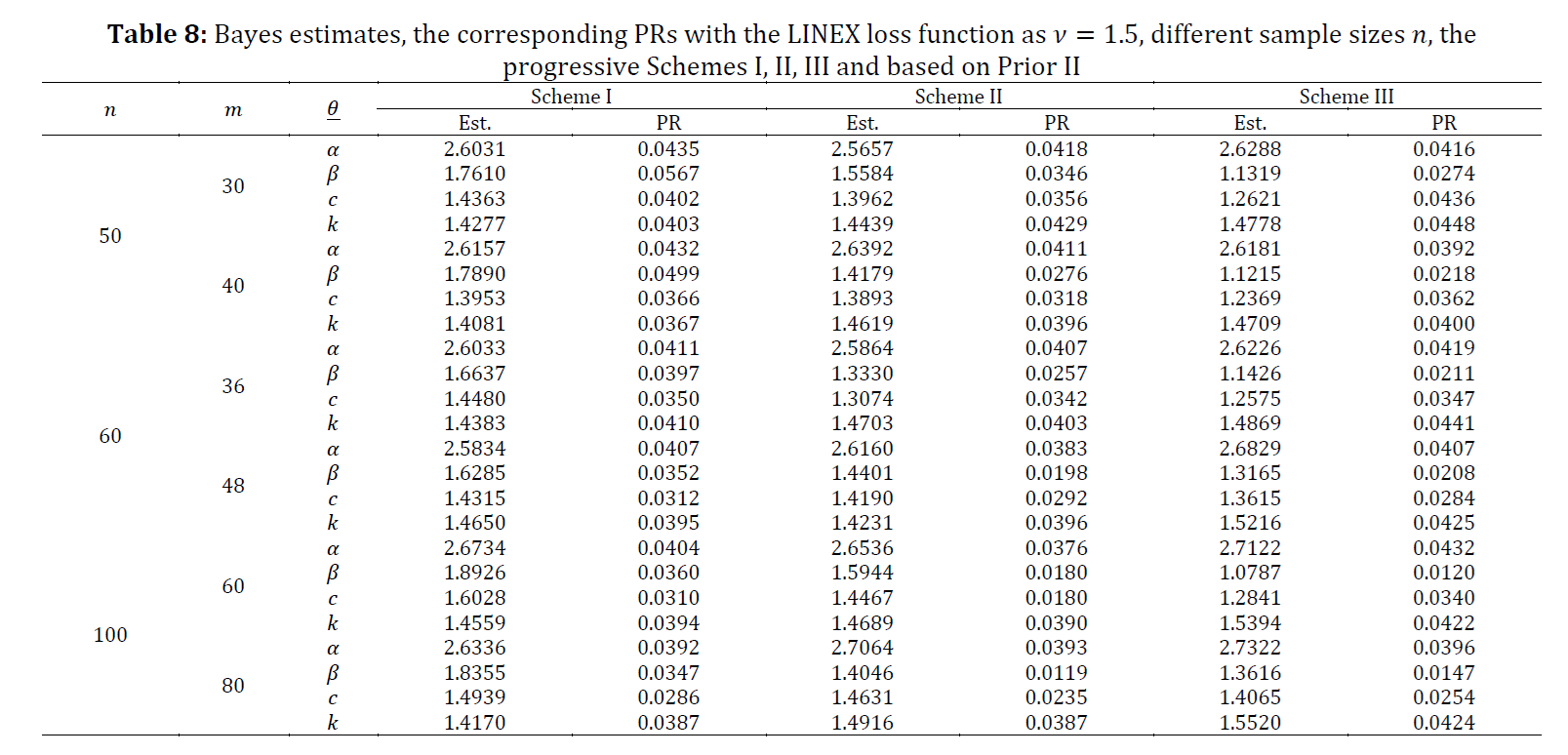
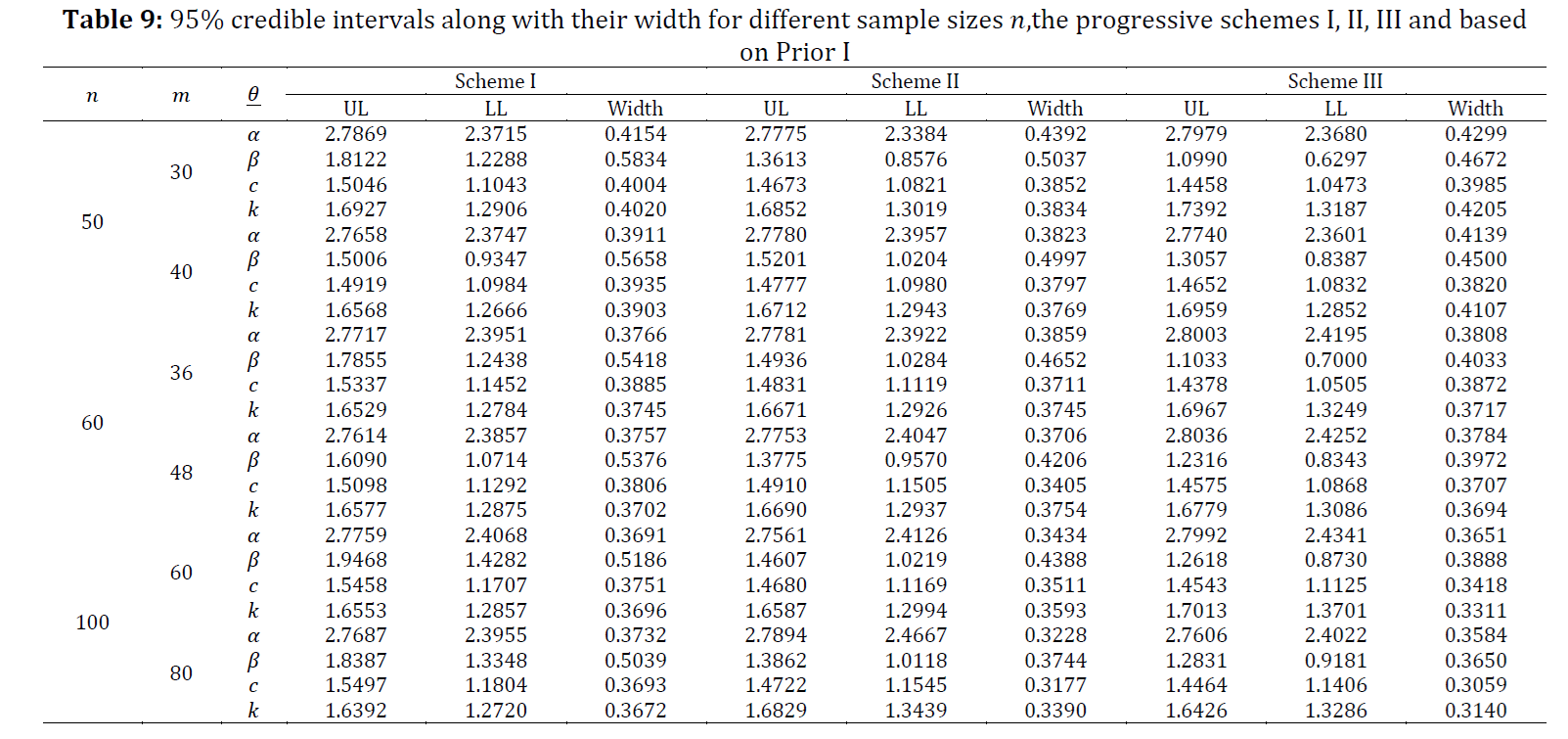
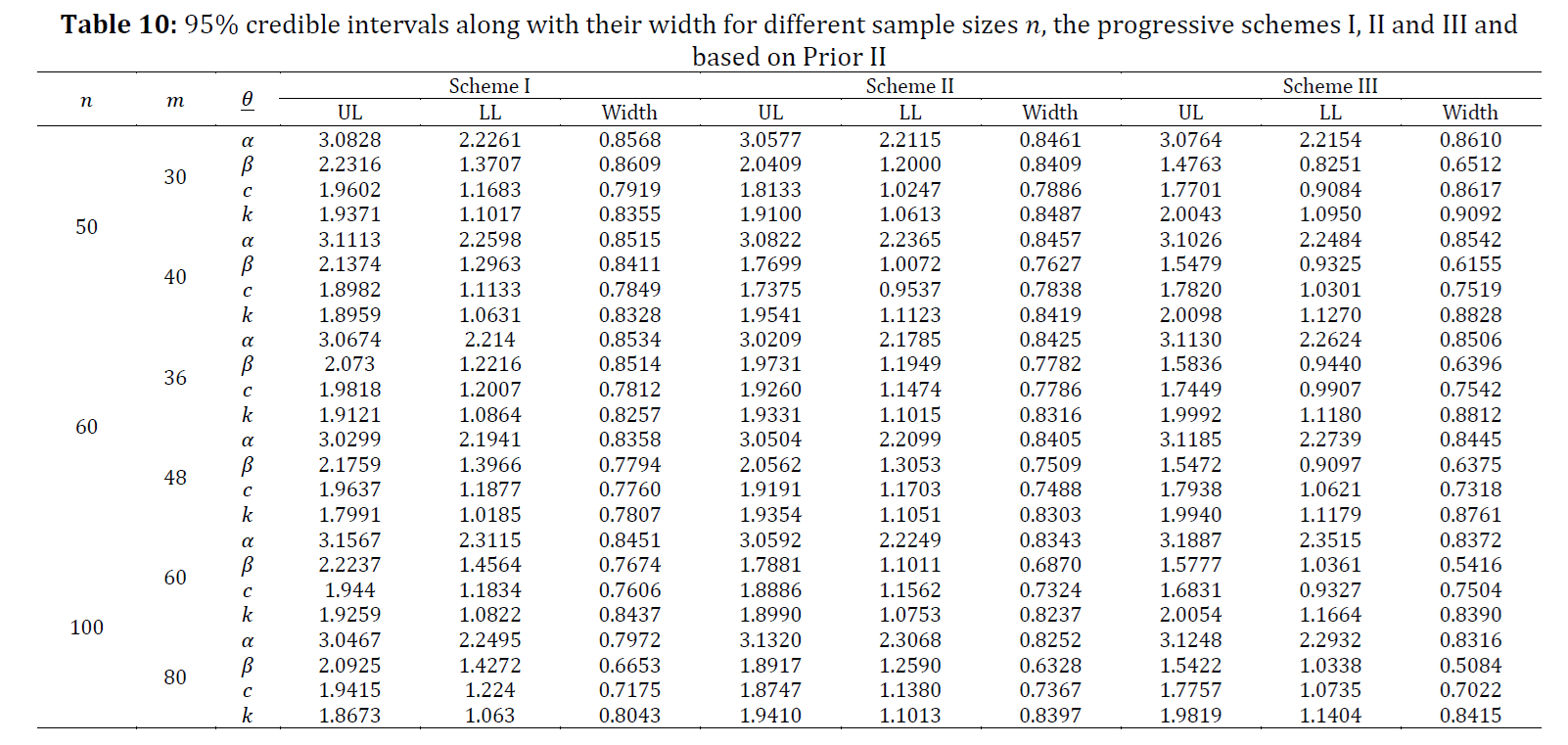
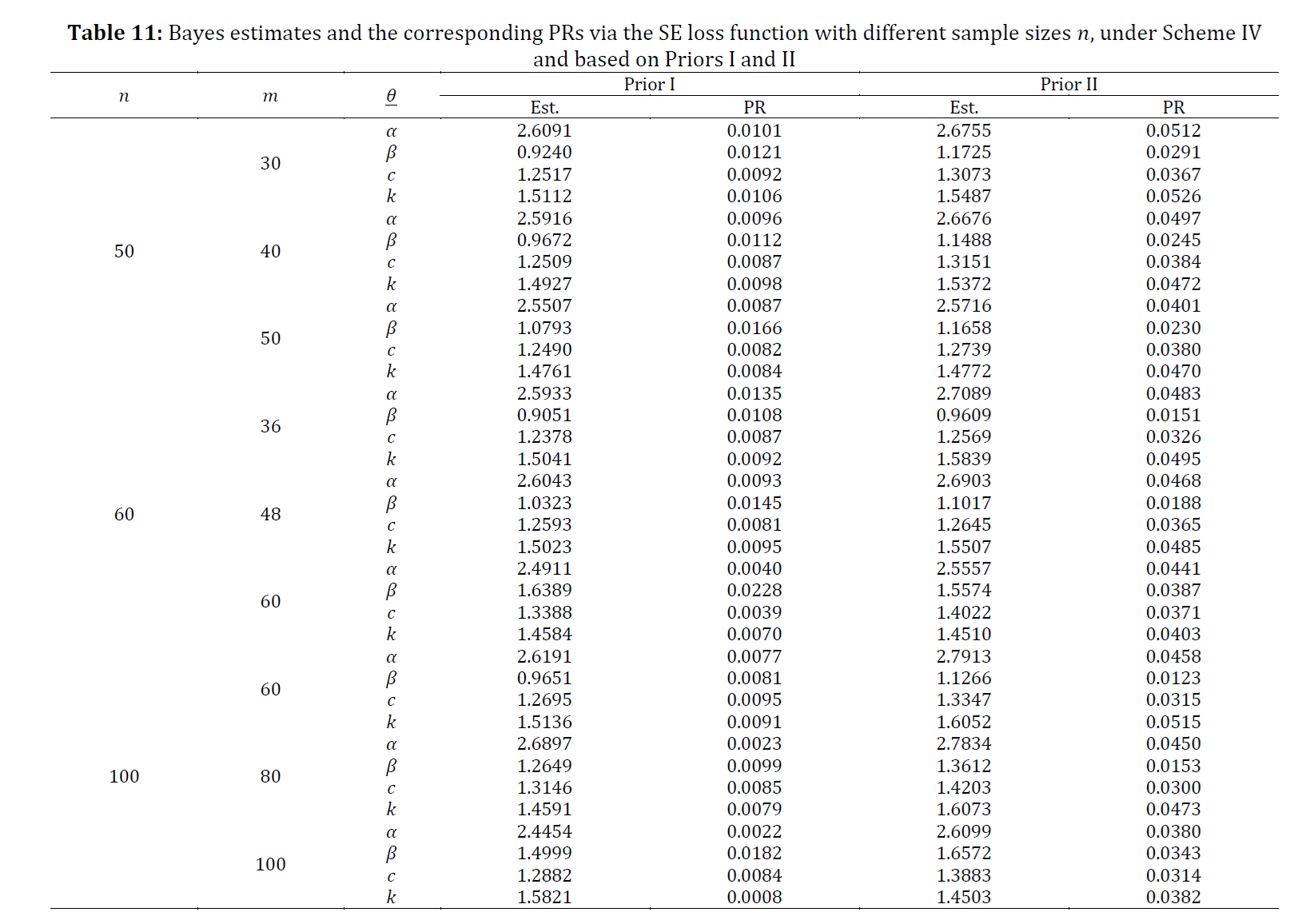
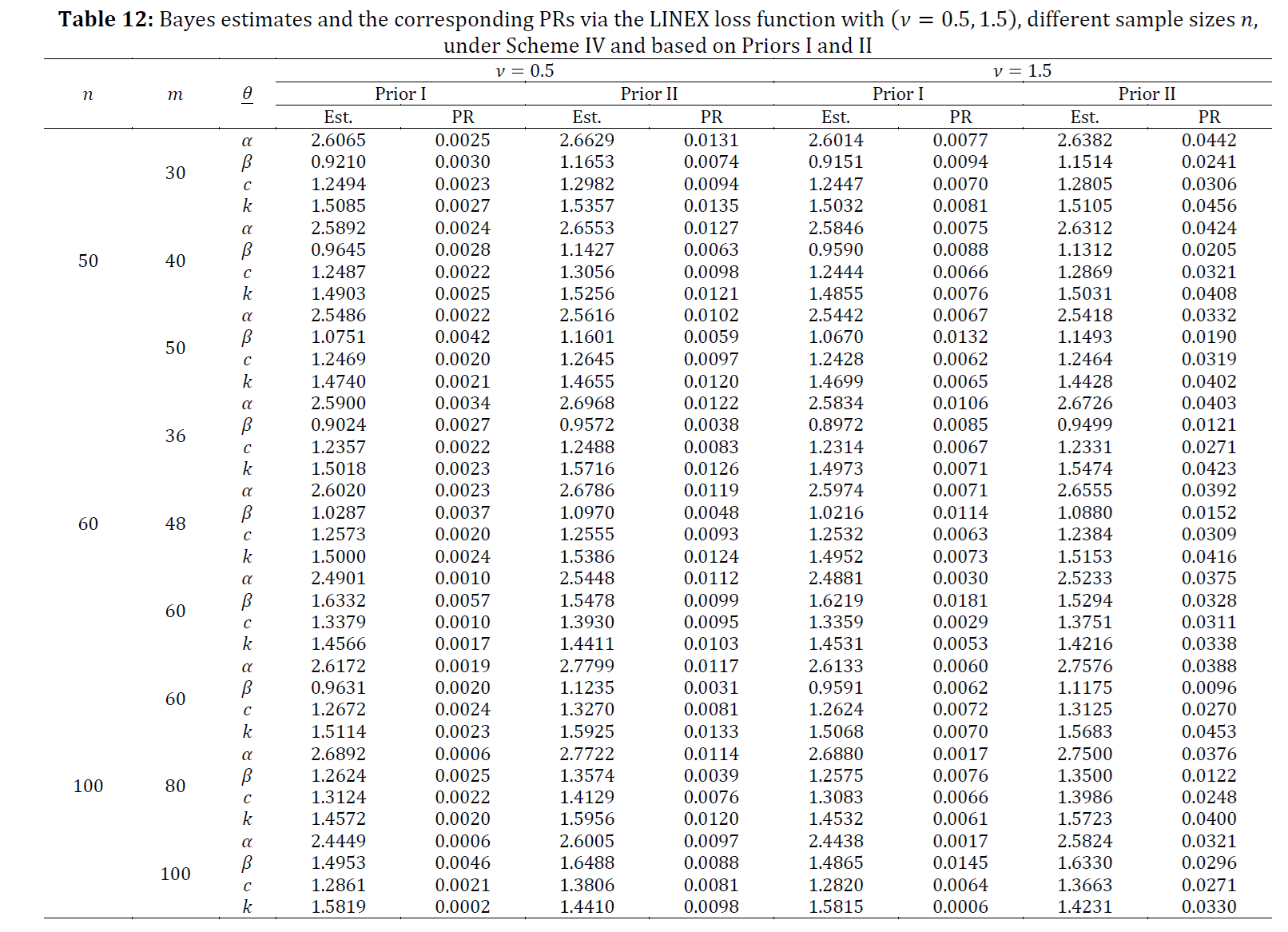
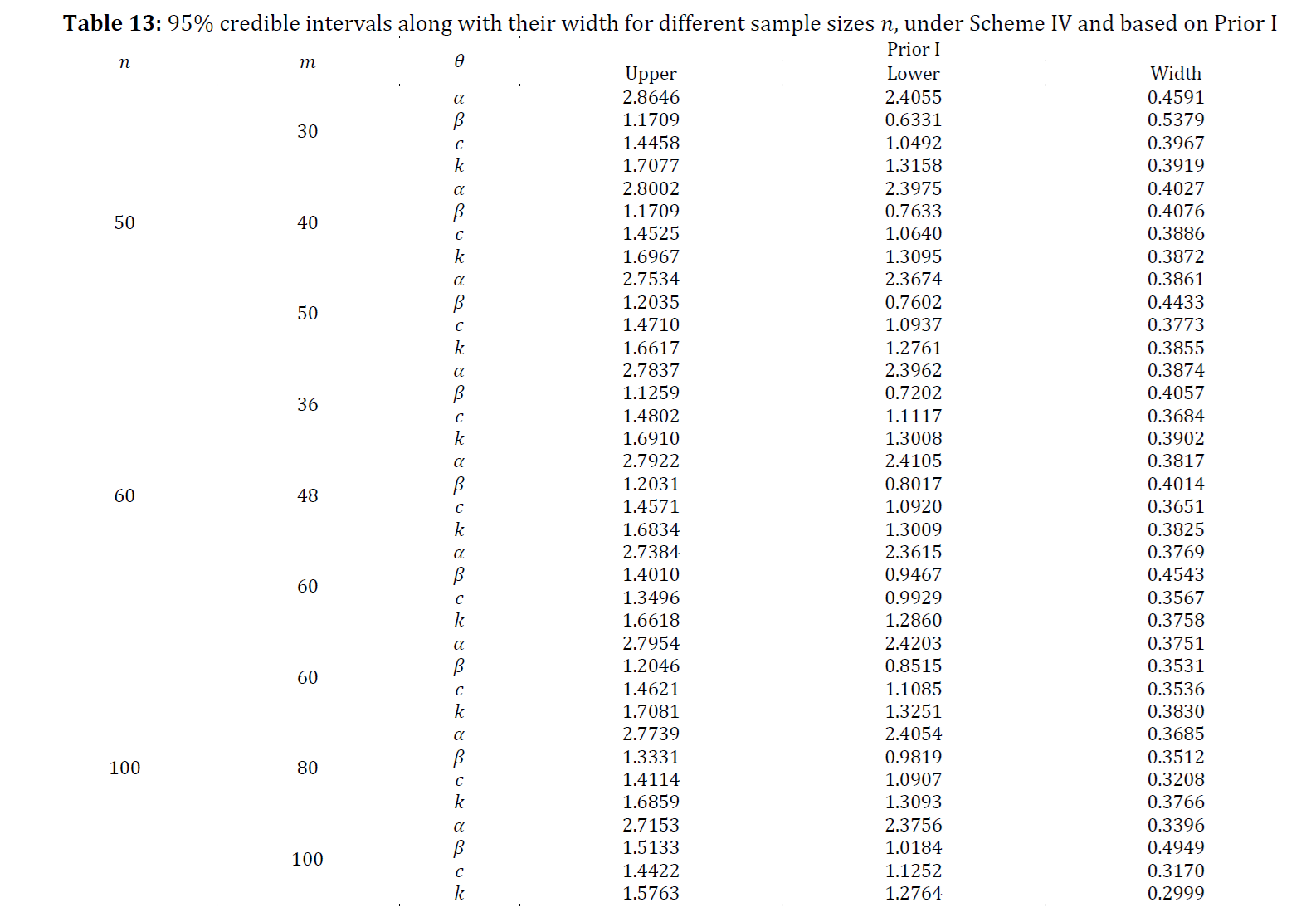
Table 10 Table 11 Table 12 Table 13 Table 14 Table 15 Table 16



----------------------------------------------
References (43)
- Abba B, Wang H, and Bakouch HS (2022). A reliability and survival model for one and two failure modes system with applications to complete and censored datasets. Reliability Engineering & System Safety, 223: 108460. https://doi.org/10.1016/j.ress.2022.108460 [Google Scholar]
- Alotaibi R, Nassar M, and Elshahhat A (2024). Analysis of the new complementary unit Weibull model from adaptive progressively type-II hybrid. AIP Advances, 14(4): 045014. https://doi.org/10.1063/5.0193856 [Google Scholar]
- Alrumayh A, Weera W, Khogeer HA, and Almetwally EM (2023). Optimal analysis of adaptive type-II progressive censored for new unit-lindley model. Journal of King Saud University-Science, 35(2): 102462. https://doi.org/10.1016/j.jksus.2022.102462 [Google Scholar]
- Ateya SF and Mohammed HS (2017). Statistical inferences based on an adaptive progressive type-II censoring from exponentiated exponential distribution. Journal of the Egyptian Mathematical Society, 25(4): 393-399. https://doi.org/10.1016/j.joems.2017.06.001 [Google Scholar]
- Balakrishnan N (2007). Progressive censoring methodology: An appraisal. TEST, 16: 211-259. https://doi.org/10.1007/s11749-007-0061-y [Google Scholar]
- Balakrishnan N and Aggarwala R (2000). Progressive censoring: Theory, methods, and applications. 1st Edition, Birkhäuser, Boston, USA. https://doi.org/10.1007/978-1-4612-1334-5 [Google Scholar]
- Balakrishnan N and Cramer E (2014). The art of progressive censoring: Applications to reliability and quality. Birkhäuser, New York, USA. https://doi.org/10.1007/978-0-8176-4807-7 [Google Scholar]
- Balakrishnan N and Sandhu RA (1995). A simple simulational algorithm for generating progressive type-II censored samples. The American Statistician, 49(2): 229-230. https://doi.org/10.1080/00031305.1995.10476150 [Google Scholar]
- Chen S and Gui W (2020). Statistical analysis of a lifetime distribution with a bathtub-shaped failure rate function under adaptive progressive type-II censoring. Mathematics, 8(5): 670. https://doi.org/10.3390/math8050670 [Google Scholar]
- Cramer E and Iliopoulos G (2010). Adaptive progressive type-II censoring. TEST, 19: 342-358. https://doi.org/10.1007/s11749-009-0167-5 [Google Scholar]
- Dutta S and Kayal S (2025). Statistical inference for dependent competing risks data under adaptive type-II progressive hybrid censoring. Journal of Applied Statistics, 52(10): 1871-1903. https://doi.org/10.1080/02664763.2024.2445237 [Google Scholar] PMid:40765658
- Dutta S, Dey S, and Kayal S (2024). Bayesian survival analysis of logistic exponential distribution for adaptive progressive type-II censored data. Computational Statistics, 39: 2109-2155. https://doi.org/10.1007/s00180-023-01376-y [Google Scholar]
- Elshahhat A, Dutta S, Abo-Kasem OE, and Mohammed HS (2023). Statistical analysis of the Gompertz-Makeham model using adaptive progressively hybrid type-II censoring and its applications in various sciences. Journal of Radiation Research and Applied Sciences, 16(4): 100644. https://doi.org/10.1016/j.jrras.2023.100644 [Google Scholar]
- Haario H, Saksman E, and Tamminen J (2001). An adaptive Metropolis algorithm. Bernoulli, 7(2): 223-242. https://doi.org/10.2307/3318737 [Google Scholar]
- Hemmati F and Khorram E (2011). Bayesian analysis of the adaptive type-II progressively hybrid censoring scheme in presence of competing risks. Islamic Countries Society of Statistical Sciences, 21: 181-194. [Google Scholar]
- Hemmati F and Khorram E (2013). Statistical analysis of the log-normal distribution under type-II progressive hybrid censoring schemes. Communications in Statistics-Simulation and Computation, 42(1): 52-75. https://doi.org/10.1080/03610918.2011.633195 [Google Scholar]
- Jeon YE, Kim Y, and Seo JI (2025). Objective framework for Bayesian inference in multicomponent pareto stress–strength model under an adaptive progressive type-II censoring scheme. Mathematics, 13(9): 1379. https://doi.org/10.3390/math13091379 [Google Scholar]
- Kalantan ZI, Binhimd SM, Salem HN, AL-Dayian GR, EL-Helbawy AA, and Elaal MKA (2024). Chen-Burr XII model as a competing risks model with applications to real-life data sets. Axioms, 13(8): 531. https://doi.org/10.3390/axioms13080531 [Google Scholar]
- Kamal RM and Ismail MA (2020). The flexible Weibull extension-burr XII distribution: Model, properties and applications. Pakistan Journal of Statistics and Operation Research, 16(3): 447-460. https://doi.org/10.18187/pjsor.v16i3.2957 [Google Scholar]
- Lai CD (2013). Constructions and applications of lifetime distributions. Applied Stochastic Models in Business and Industry, 29(2): 127-140. https://doi.org/10.1002/asmb.948 [Google Scholar]
- Lin CT and Huang YL (2012). On progressive hybrid censored exponential distribution. Journal of Statistical Computation and Simulation, 82(5): 689-709. https://doi.org/10.1080/00949655.2010.550581 [Google Scholar]
- Lin CT, Ng HKT, and Chan PS (2009). Statistical inference of type-II progressively hybrid censored data with Weibull lifetimes. Communications in Statistics—Theory and Methods, 38(10): 1710-1729. https://doi.org/10.1080/03610920902850069 [Google Scholar]
- Liu X, Ahmad Z, Gemeay AM, Abdulrahman AT, Hafez EH, and Khalil N (2021). Modeling the survival times of the COVID-19 patients with a new statistical model: A case study from China. PLOS ONE, 16(7): e0254999. https://doi.org/10.1371/journal.pone.0254999 [Google Scholar] PMid:34310646 PMCid:PMC8312982
- Makubate B, Oluyede B, and Gabanakgosi M (2021). A new Lindley-Burr XII distribution: Model, properties and applications. International Journal of Statistics and Probability, 10(4): 33-51. https://doi.org/10.5539/ijsp.v10n4p33 [Google Scholar]
- Mdlongwa P, Oluyede B, Amey A, and Huang S (2017). The Burr XII modified Weibull distribution: model, properties and applications. Electronic Journal of Applied Statistical Analysis, 10(1): 118-145. [Google Scholar]
- Méndez-González LC, Rodríguez-Picón LA, Pérez-Olguín IJC, and Vidal Portilla LR (2023a). An additive Chen distribution with applications to lifetime data. Axioms, 12(2): 118. https://doi.org/10.3390/axioms12020118 [Google Scholar]
- Méndez-González LC, Rodríguez-Picón LA, Rodríguez Borbón MI, and Sohn H (2023b). The Chen–Perks distribution: Properties and reliability applications. Mathematics, 11(13): 3001. https://doi.org/10.3390/math11133001 [Google Scholar]
- Mohammad HH, Alamri FS, Salem HN, and EL-Helbawy AA (2024). The additive Xgamma-Burr XII distribution: Properties, estimation and applications. Symmetry, 16(6): 659. https://doi.org/10.3390/sym16060659 [Google Scholar]
- Mohammed HS, Nassar M, Alotaibi R, and Elshahhat A (2022). Analysis of adaptive progressive type-II hybrid censored dagum data with applications. Symmetry, 14(10): 2146. https://doi.org/10.3390/sym14102146 [Google Scholar]
- Nassar M and Abo-Kasem OE (2017). Estimation of the inverse Weibull parameters under adaptive type-II progressive hybrid censoring scheme. Journal of Computational and Applied Mathematics, 315: 228-239. https://doi.org/10.1016/j.cam.2016.11.012 [Google Scholar]
- Nassar M, Abo-Kasem O, Zhang C, and Dey S (2018). Analysis of Weibull distribution under adaptive type-II progressive hybrid censoring scheme. Journal of the Indian Society for Probability and Statistics, 19(1): 25-65. https://doi.org/10.1007/s41096-018-0032-5 [Google Scholar]
- Ng HKT, Kundu D, and Chan PS (2009). Statistical analysis of exponential lifetimes under an adaptive type‐II progressive censoring scheme. Naval Research Logistics, 56(8): 687-698. https://doi.org/10.1002/nav.20371 [Google Scholar]
- Oluyede B, Foya S, Warahena-Liyanage G, and Huang S (2016). The log-logistic Weibull distribution with applications to lifetime data. Austrian Journal of Statistics, 45(3): 43-69. https://doi.org/10.17713/ajs.v45i3.107 [Google Scholar]
- Osagie SA and Osemwenkhae JE (2020). Lomax-Weibull distribution with properties and applications in lifetime analysis. International Journal of Mathematical Sciences and Optimization: Theory and Applications, 2020(1): 718-732. [Google Scholar]
- Sewailem MF and Baklizi A (2019). Inference for the log-logistic distribution based on an adaptive progressive type-II censoring scheme. Cogent Mathematics & Statistics, 6(1): 1684228. https://doi.org/10.1080/25742558.2019.1684228 [Google Scholar]
- Sobhi MMA and Soliman AA (2016). Estimation for the exponentiated Weibull model with adaptive type-II progressive censored schemes. Applied Mathematical Modelling, 40(2): 1180-1192. https://doi.org/10.1016/j.apm.2015.06.022 [Google Scholar]
- Tarvirdizade B and Ahmadpour M (2021). A new extension of Chen distribution with applications to lifetime data. Communications in Mathematics and Statistics, 9: 23-38. https://doi.org/10.1007/s40304-019-00185-4 [Google Scholar]
- Thanh Thach T and Briš R (2021). An additive Chen‐Weibull distribution and its applications in reliability modeling. Quality and Reliability Engineering International, 37(1): 352-373. https://doi.org/10.1002/qre.2740 [Google Scholar]
- Varian HR (1975). A Bayesian approach to real estate assessment. In: Fienberg SE and Zellner A (Eds.), Studies in Bayesian econometric and statistics in Honor of Leonard J. Savage: 195-208. North-Holland Publishing Company, Amsterdam, Netherlands. https://doi.org/10.4337/9781782543626.00013 [Google Scholar]
- Wang FK (2000). A new model with bathtub-shaped failure rate using an additive Burr XII distribution. Reliability Engineering & System Safety, 70(3): 305-312. https://doi.org/10.1016/S0951-8320(00)00066-1 [Google Scholar]
- Xie M and Lai CD (1996). Reliability analysis using an additive Weibull model with bathtub-shaped failure rate function. Reliability Engineering & System Safety, 52(1): 87-93. https://doi.org/10.1016/0951-8320(95)00149-2 [Google Scholar]
- Ye ZS, Chan PS, Xie M, and Ng HKT (2014). Statistical inference for the extreme value distribution under adaptive type-II progressive censoring schemes. Journal of Statistical Computation and Simulation, 84(5): 1099-1114. https://doi.org/10.1080/00949655.2012.740481 [Google Scholar]
- Zellner A (1986). Bayesian estimation and prediction using asymmetric loss functions. Journal of the American Statistical Association, 81(394): 446-451. https://doi.org/10.1080/01621459.1986.10478289 [Google Scholar]