International
ADVANCED AND APPLIED SCIENCES
EISSN: 2313-3724, Print ISSN: 2313-626X
Frequency: 12


Volume 13, Issue 3 (March 2026), Pages: 212-223

----------------------------------------------
Original Research Paper
Procreate’s influence on student creative self-belief: A quantitative analysis of motivational and expectational pathways in visual communication education
Author(s):
Affiliation(s):
1Faculty of Creative Technology and Heritage, Universiti Malaysia Kelantan, Sabah, Malaysia
2Faculty of Fine Arts Design and Architecture, Zhuhai College of Science and Technology, Zhuhai, China
3Chengdu Academy of Fine Arts, Sichuan Conservatory of Music, Chengdu, China
4Art College, Harbin Cambridge College, Harbin, China
Full text

* Corresponding Author.
 Corresponding author's ORCID profile: https://orcid.org/0000-0001-9076-1206
Digital Object Identifier (DOI)
https://doi.org/10.21833/ijaas.2026.03.022
Abstract
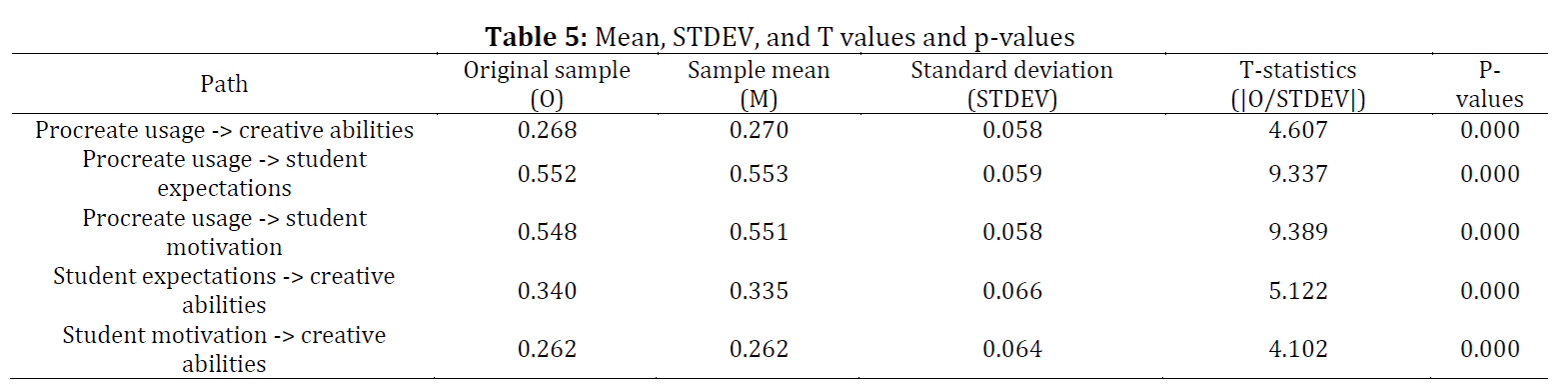
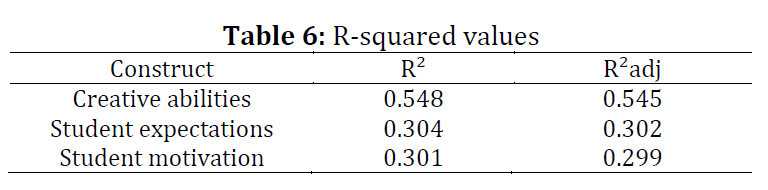
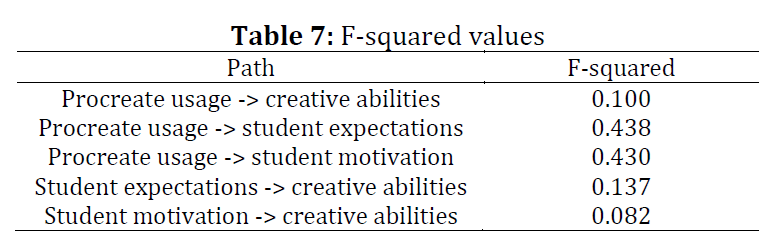
This study investigates how Procreate influences the creative capacities of students in visual communication programs through three related mechanisms: cognitive engagement, motivation, and achievement expectations. Using a quantitative cross-sectional survey design, data were collected from 374 students and analyzed using partial least squares structural equation modelling (PLS-SEM). The results supported all proposed hypotheses and showed that Procreate use is associated with higher levels of perceived creative self-efficacy rather than objective creative ability. Perceived creativity was directly related to cognitive engagement (β = 0.268) and indirectly influenced through increased motivation (β = 0.548), which subsequently affected creative ability (β = 0.262), as well as through strengthened expectations of creative success (β = 0.552), which in turn influenced creative ability (β = 0.340). Together, these factors explained 54.8% of the variance in creative abilities, with expectations demonstrating a stronger mediating effect than motivation. The findings extend previous research by clarifying the psychological processes through which digital tools shape creative expression. From an instructional design perspective, the results suggest that curricula should move beyond teaching technical software skills and instead focus on fostering motivation and positive expectations for creative achievement when integrating Procreate. Overall, the study highlights the complex relationship between digital tools and creativity in visual communication education and provides empirical guidance for using technology to support sustained creative development.
© 2026 The Authors. Published by IASE.
This is an
Keywords
Digital creativity, Procreate, Creative self-efficacy, Visual communication education, Learning motivation
Article history
Received 28 August 2025, Received in revised form 1 February 2026, Accepted 18 March 2026
Acknowledgment
No Acknowledgment.
Compliance with ethical standards
Ethical considerations:
Participation was entirely voluntary, and informed consent was obtained from all respondents prior to data collection. Anonymity and confidentiality were assured, and no identifying personal information was collected.
Conflict of interest: The author(s) declared no potential conflicts of interest with respect to the research, authorship, and/or publication of this article.Citation:
Ying X, Shaharuddin SSB, Ramli SB, Heng Y, and Nan GN (2026). Procreate’s influence on student creative self-belief: A quantitative analysis of motivational and expectational pathways in visual communication education. International Journal of Advanced and Applied Sciences, 13(3): 212-223
Figures
No Figure
Tables
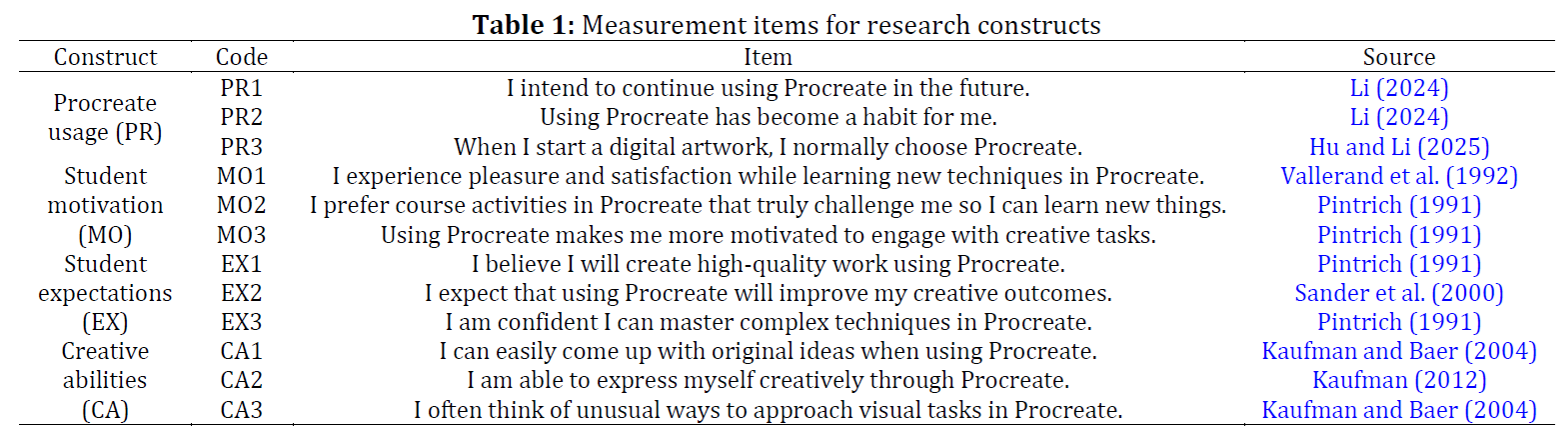
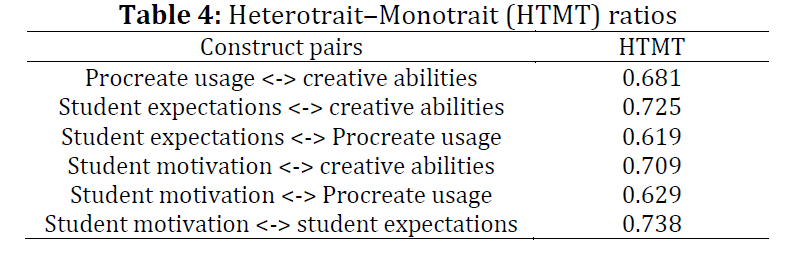
Table 1 Table 2 Table 3 Table 4 Table 5 Table 6 Table 7


----------------------------------------------
References (34)
Asare S, Walden P, Aniagyei E, and Emmanuel M (2023). A comparative study of traditional art techniques versus digital art techniques in the context of college visual art education. American Journal of Arts, Social and Humanity Studies, 3(1): 21-34. https://doi.org/10.47672/ajashs.1556 [Google Scholar]
Azis ACK, Lubis SK, Kartono G, and Daulay MAJ (2023). Digitalisation of teaching materials for Toba Batak ethnic decorative variety with Procreate media based on p-books and e-books. Jurnal Kependidikan: Jurnal Hasil Penelitian dan Kajian Kepustakaan di Bidang Pendidikan, Pengajaran, dan Pembelajaran, 9(3): 782-793. https://doi.org/10.33394/jk.v9i3.8746 [Google Scholar]
Bratslavsky L, Wright A, Kritselis A, and Luftig D (2019). The strategically ambiguous assignment: An approach to promoting critical and creative thinking in visual communication. Journal of Visual Literacy, 38(4): 285-304. https://doi.org/10.1080/1051144X.2019.1673999 [Google Scholar]
Cai W, Khapova S, Bossink B, Lysova E, and Yuan J (2020). Optimizing employee creativity in the digital era: Uncovering the interactional effects of abilities, motivations, and opportunities. International Journal of Environmental Research and Public Health, 17(3): 1038. https://doi.org/10.3390/ijerph17031038 [Google Scholar] PMid:32041278 PMCid:PMC7037383
Cohen J (1988). Statistical power analysis for the behavioral sciences. 2nd Edition, Lawrence Erlbaum Associates, Hillsdale, USA. [Google Scholar]
Goulet-Pelletier JC, Gaudreau P, and Cousineau D (2023). Do students motivated to learn have better creative abilities? Learning and Individual Differences, 106: 102327. https://doi.org/10.1016/j.lindif.2023.102327 [Google Scholar]
Hatzigianni M and Kalamatianou M (2018). Teaching visual arts with digital technologies. In: Danby SJ, Fleer M, Davidson C, and Hatzigianni M (Eds.), Digital childhoods: Technologies and children's everyday lives: 197-213. Springer, Berlin, Germany. https://doi.org/10.1007/978-981-10-6484-5_13 [Google Scholar]
Henseler J, Dijkstra TK, Sarstedt M, Ringle CM, Diamantopoulos A, Straub DW, Ketchen DJ Jr, Hair JF, Hult GTM, and Calantone RJ (2014). Common beliefs and reality about PLS: Comments on Rönkkö and Evermann (2013). Organizational Research Methods, 17(2): 182-209. https://doi.org/10.1177/1094428114526928 [Google Scholar] PMCid:PMC8717979
Hu B and Li Y (2025). The role of digital drawing software in enhancing specific artistic skills and behavioral intentions in art education. Cogent Education, 12(1): 2481679. https://doi.org/10.1080/2331186X.2025.2481679 [Google Scholar]
Jankowska DM and Karwowski M (2015). Measuring creative imagery abilities. Frontiers in Psychology, 6: 1591. https://doi.org/10.3389/fpsyg.2015.01591 [Google Scholar] PMid:26539140 PMCid:PMC4612655
Kaufman JC (2012). Counting the muses: Development of the Kaufman domains of creativity scale (K-DOCS). Psychology of Aesthetics, Creativity, and the Arts, 6(4): 298-308. https://doi.org/10.1037/a0029751 [Google Scholar]
Kaufman JC and Baer J (2004). Sure, I'm creative—but not in mathematics! Self-reported creativity in diverse domains. Empirical Studies of the Arts, 22(2): 143-155. https://doi.org/10.2190/26HQ-VHE8-GTLN-BJJM [Google Scholar]
Klima G and Kárpáti A (2021). Digital creativity development in an e-learning environment–A 3D design project. Central European Journal of Educational Research, 3(3): 49-54. https://doi.org/10.37441/cejer/2021/3/3/10016 [Google Scholar]
Kolyvas S (2020). Innovative and collaborative learning in visual arts with the use of modern educational software. Education Quarterly Reviews, 3(2): 194-200. https://doi.org/10.31014/aior.1993.03.02.131 [Google Scholar]
Korepanova A, Lightfoot C, and Pata K (2024). Leveraging existing online platforms to support knowledge exchange between visual arts educators. In: Uden L and Liberona D (Eds.), Learning technology for education challenges. LTEC 2024. Communications in Computer and Information Science, 2082: 155-165. Springer, Cham, Switzerland. https://doi.org/10.1007/978-3-031-61678-5_11 [Google Scholar]
Kozhevnikov M, Kozhevnikov M, Yu CJ, and Blazhenkova O (2013). Creativity, visualization abilities, and visual cognitive style. British Journal of Educational Psychology, 83(2): 196-209. https://doi.org/10.1111/bjep.12013 [Google Scholar] PMid:23692530
Li Y (2024). Factors influencing the continued use of Procreate digital painting software by fine arts students in Chongqing, China. International Journal of Sociologies and Anthropologies Science Reviews, 4(5): 583-600. https://doi.org/10.60027/ijsasr.2024.4863 [Google Scholar]
Palmiero M, Nakatani C, Raver D, Belardinelli MO, and van Leeuwen C (2010). Abilities within and across visual and verbal domains: How specific is their influence on creativity? Creativity Research Journal, 22(4): 369-377. https://doi.org/10.1080/10400419.2010.523396 [Google Scholar]
Palmiero M, Nori R, Aloisi V, Ferrara M, and Piccardi L (2015). Domain-specificity of creativity: A study on the relationship between visual creativity and visual mental imagery. Frontiers in Psychology, 6: 1870. https://doi.org/10.3389/fpsyg.2015.01870 [Google Scholar]
Pikhart M, Habeb Al-Obaydi L, and Klimova B (2024). Does digital learning stimulate creativity? Cogent Arts and Humanities, 11(1): 2407103. https://doi.org/10.1080/23311983.2024.2407103 [Google Scholar]
Pintrich PR (1991). A manual for the use of the motivated strategies for learning questionnaire (MSLQ). Technical Report No. 91-8-004, Education Resources Information Center (ERIC), Washington, USA. [Google Scholar]
Qiu Y (2024). Optimization of visual communication design courses in Chinese colleges and universities under the background of digitalization. Journal of Education, Humanities and Social Sciences, 45: 69-74. https://doi.org/10.54097/1gb7r658 [Google Scholar]
Samper-Márquez JJ and Oropesa-Ruiz NF (2025). Scoping review on digital creativity: Definition, approaches, and current trends. Education Sciences, 15(2): 202. https://doi.org/10.3390/educsci15020202 [Google Scholar]
Sander P, Stevenson K, King M, and Coates D (2000). University students' expectations of teaching. Studies in Higher Education, 25(3): 309-323. https://doi.org/10.1080/03075070050193433 [Google Scholar]
Stambekova Zh, Yeraliyeva A, and Maksotova T (2024). Inculcation of future teachers of fine arts to innovative activities based on the Procreate graphic program. Bulletin of Abai KazNPU: Series of Pedagogical Sciences, 84(4): 193-206. https://doi.org/10.51889/2959-5762.2024.84.4.018 [Google Scholar]
Stoyanova V and Antova M (2020). Digital drawing as a tool for achieving decorative-abstract imagery in visual art education. Visual Studies, 4(3): 249-255. https://doi.org/10.54664/OKSD5571 [Google Scholar]
Sundar P (2024). Crafting creativity: Digital tool's role in art education. Shanlax International Journal of English, 13(S1-Dec): 80-82. https://doi.org/10.34293/english.v13iS1-Dec.8530 [Google Scholar]
Tang C, Mao S, Naumann SE, and Xing Z (2022). Improving student creativity through digital technology products: A literature review. Thinking Skills and Creativity, 44: 101032. https://doi.org/10.1016/j.tsc.2022.101032 [Google Scholar]
Vallerand RJ, Pelletier LG, Blais MR, Briere NM, Senecal C, and Vallieres EF (1992). The Academic Motivation Scale: A measure of intrinsic, extrinsic, and amotivation in education. Educational and Psychological Measurement, 52(4): 1003-1017. https://doi.org/10.1177/0013164492052004025 [Google Scholar]
van Langeveld MC and Kessler R (2010). Digital visualization tools improve teaching 3D character modeling. In the Proceedings of the 41st ACM technical symposium on Computer science education, Association for Computing Machinery, Milwaukee, USA: 82-86. https://doi.org/10.1145/1734263.1734293 [Google Scholar]
Wang B and Li PP (2024). Digital creativity in STEM education: The impact of digital tools and pedagogical learning models on the students' creative thinking skills development. Interactive Learning Environments, 32(6): 2633-2646. https://doi.org/10.1080/10494820.2022.2155839 [Google Scholar]
Wang B and Wang M (2018). Research on "creative" visual thinking mode in visual communication design. Advances in Social Science, Education and Humanities Research, 132: 174-177. https://doi.org/10.2991/sser-17.2018.36 [Google Scholar]
Xie H (2024). Improving students' drawing skills with digital tools: A case study from Zhengzhou, China. International Journal of Humanities and Arts Computing, 18(1): 148-166. https://doi.org/10.3366/ijhac.2024.0326 [Google Scholar]
- Zheng H (2023). Research on the application of digital media art in visual communication design teaching. The Educational Review, USA, 7(7): 990-993. https://doi.org/10.26855/er.2023.07.026 [Google Scholar]