International
ADVANCED AND APPLIED SCIENCES
EISSN: 2313-3724, Print ISSN: 2313-626X
Frequency: 12


Volume 13, Issue 3 (March 2026), Pages: 180-189

----------------------------------------------
Original Research Paper
Passion and pressure in teaching: Exploring the motivation, challenges, and resilience of mathematics teachers in Iloilo Province
Author(s):
Affiliation(s):
College of Education, Northern Iloilo State University, Barotac Viejo Campus, Iloilo, Philippines
Full text

* Corresponding Author.
 Corresponding author's ORCID profile: https://orcid.org/0000-0002-7653-4178
Digital Object Identifier (DOI)
https://doi.org/10.21833/ijaas.2026.03.018
Abstract
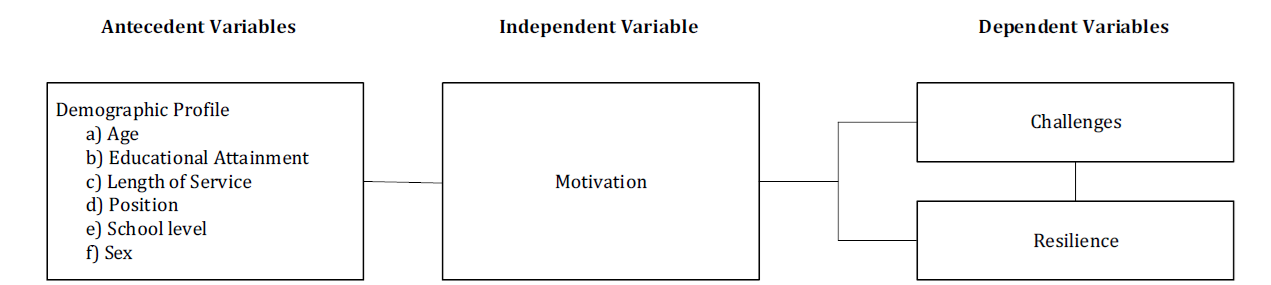
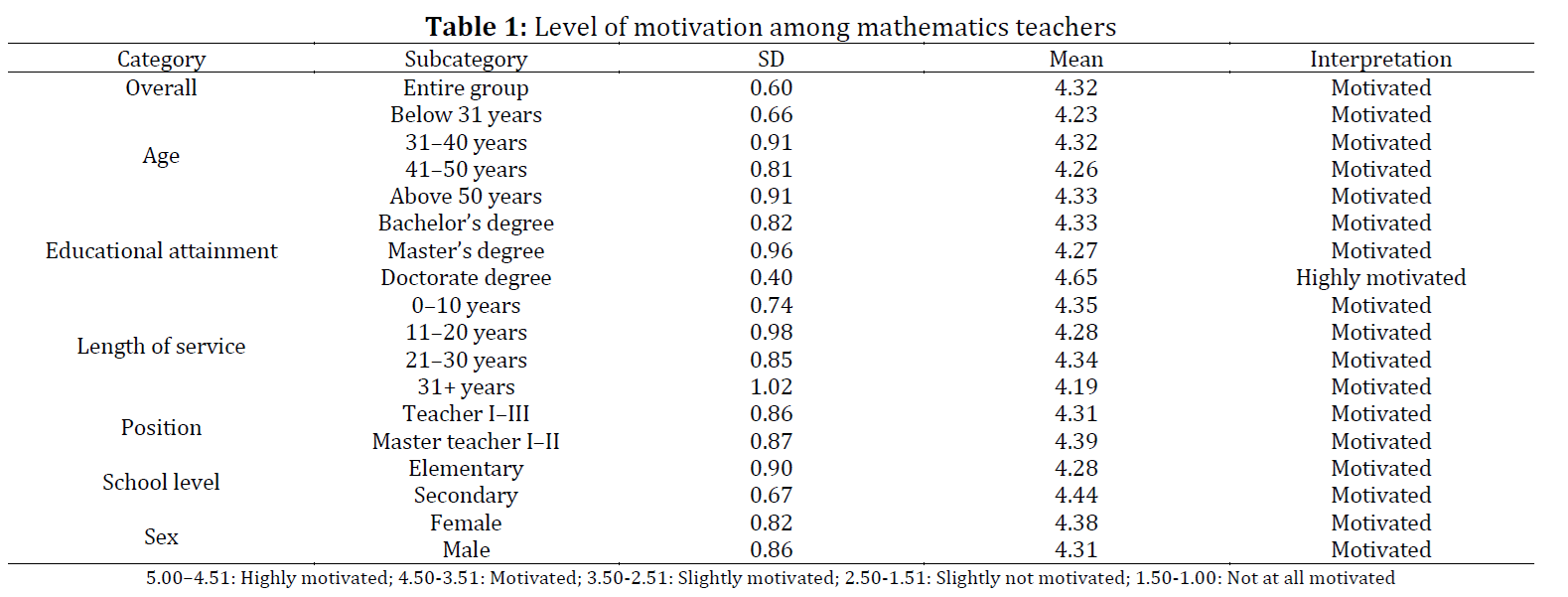
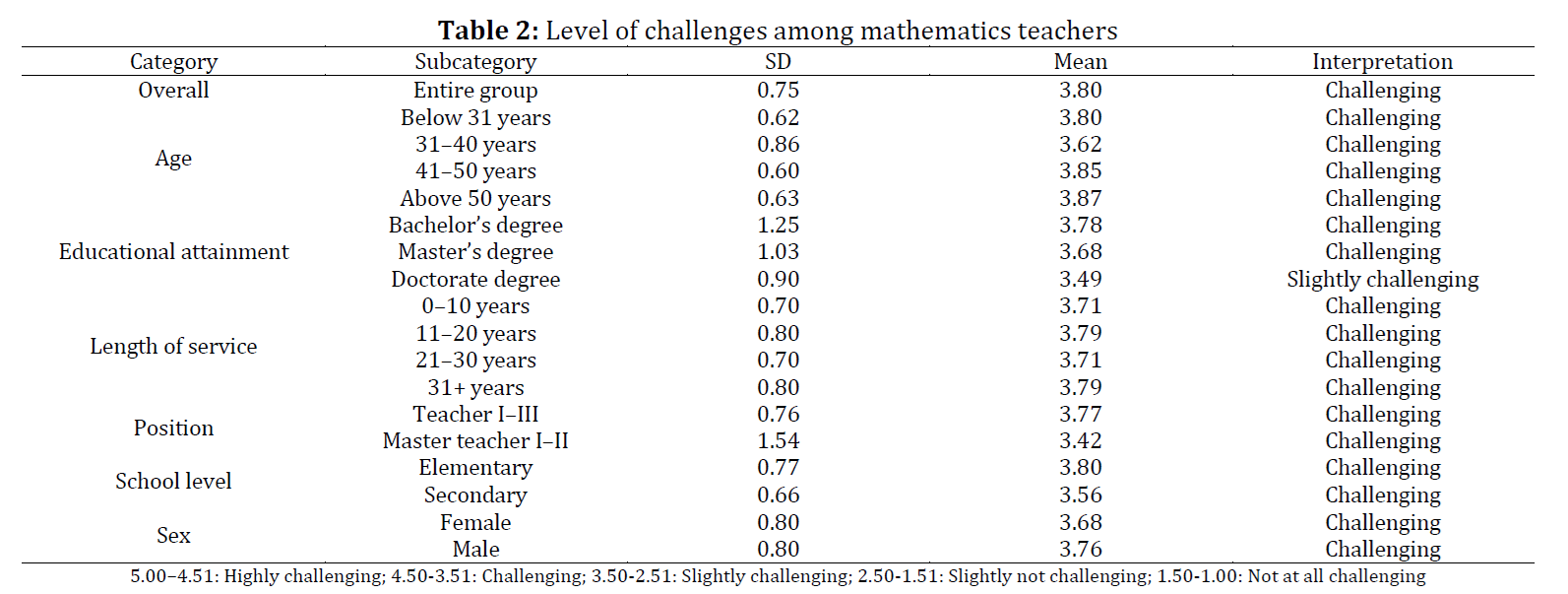
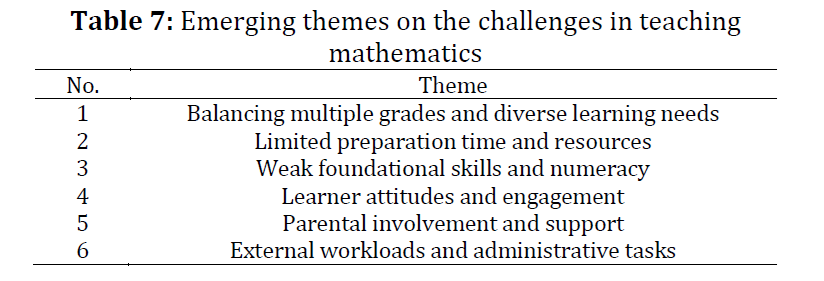
This study examined the levels of motivation, challenges, and resilience among 159 elementary and secondary mathematics teachers in a municipality in the Fifth District of Iloilo, Philippines. The study used an explanatory sequential mixed-methods design. First, quantitative data were collected through a researcher-developed questionnaire and analyzed using descriptive statistics and Spearman’s rho correlation. This phase was followed by a qualitative stage that included semi-structured interviews analyzed through thematic analysis. The results showed that teachers were generally motivated (M = 4.32), mainly due to their intrinsic commitment to student success. Although teaching mathematics was perceived as challenging (M = 3.80), teachers demonstrated high levels of resilience (M = 3.85). The correlation analysis revealed a strong positive relationship between challenges and resilience (r = 0.832, p < .05), indicating that dealing with professional challenges can strengthen teachers’ adaptive capacity. The qualitative analysis identified six major themes related to the challenges teachers face: balancing multiple grade levels and diverse learning needs, limited preparation time and resources, weak foundational numeracy skills among students, learner attitudes and engagement, parental involvement and support, and external workloads and administrative tasks. Based on these findings, the MathRISE (Mathematics Resource, Innovation, and Support for Educators) extension program was developed. The program includes two main initiatives: Project MENTOR, which focuses on professional development and peer coaching, and Project PACE, which aims to improve parental involvement and classroom efficiency. The study concludes that establishing structured support programs is essential for maintaining teacher well-being and improving the quality of mathematics instruction.
© 2026 The Authors. Published by IASE.
This is an
Keywords
Mathematics teachers, Teacher motivation, Teaching challenges, Teacher resilience, Mathematics education
Article history
Received 29 September 2025, Received in revised form 25 February 2026, Accepted 12 March 2026
Acknowledgment
The researcher thanks the participants, school heads, subject coordinators, and experts for their support and validation, which greatly enhanced the study.
Compliance with ethical standards
Ethical considerations:
An informed consent form was attached at the beginning of the researcher-made survey questionnaire, clearly outlining the study’s purpose, objectives, methodology, potential benefits, participants’ right to withdraw, and instructions for completing the survey. Throughout the data collection and analysis, the researcher strictly maintained confidentiality and anonymity, ensuring voluntary participation and safeguarding respondents’ rights and privacy. The study adhered to established ethical standards and posed no risk to the participants’ well-being at any stage of the research.
Conflict of interest: The author(s) declared no potential conflicts of interest with respect to the research, authorship, and/or publication of this article.Citation:
Aguirre DLV (2026). Passion and pressure in teaching: Exploring the motivation, challenges, and resilience of mathematics teachers in Iloilo Province. International Journal of Advanced and Applied Sciences, 13(3): 180-189
Figures
Tables
Table 1 Table 2 Table 3 Table 4 Table 5 Table 6 Table 7
----------------------------------------------
References (32)
Acharya BR, Kshetree MP, Khanal B, Panthi RK, and Belbase S (2021). Mathematics educators' perspectives on cultural relevance of basic level mathematics in Nepal. Journal on Mathematics Education, 12(1): 17-48. https://doi.org/10.22342/jme.12.1.12955.17-48 [Google Scholar]
Ahmad M and Wilkins S (2025). Purposive sampling in qualitative research: A framework for the entire journey. Quality & Quantity, 59: 1461-1479. https://doi.org/10.1007/s11135-024-02022-5 [Google Scholar]
Alon L, Schwarts G, and Sabbah S (2025). Understanding resilience in mathematics education: Teachers' perspectives and definitions. In the Society for Information Technology & Teacher Education International Conference, Association for the Advancement of Computing in Education (AACE), Waynesville, USA: 1406-1411. [Google Scholar]
Balatero MFT and Bauyot MM (2024). Enhancing teacher motivation: Leadership strategies in Panabo City public senior high schools. Asian Journal of Education and Social Studies, 50(7): 286-299. https://doi.org/10.9734/ajess/2024/v50i71463 [Google Scholar]
Braun V and Clarke V (2006). Using thematic analysis in psychology. Qualitative Research in Psychology, 3(2): 77-101. https://doi.org/10.1191/1478088706qp063oa [Google Scholar]
Creswell JW and Creswell JD (2022). Research design: Qualitative, quantitative, and mixed methods approaches. 6th Edition, SAGE Publishing, Thousand Oaks, USA. [Google Scholar]
Dickhäuser O, Janke S, Daumiller M, and Dresel M (2021). Motivational school climate and teachers' achievement goal orientations: A hierarchical approach. British Journal of Educational Psychology, 91(1): 391-408. https://doi.org/10.1111/bjep.12370 [Google Scholar] PMid:32717126
Ekmekci A and Serrano DM (2022). The impact of teacher quality on student motivation, achievement, and persistence in science and mathematics. Education Sciences, 12(10): 649. https://doi.org/10.3390/educsci12100649 [Google Scholar]
Escasinas G (2025). Instructional issues, burnout, stress, and coping strategies of mathematics teachers in elementary schools in Lapu-Lapu City: Basis for a psycho-social support plan. AIDE Interdisciplinary Research Journal, 12(1): 258-295. https://doi.org/10.56648/aide-irj.v12i1.193 [Google Scholar]
Franklin AV and Chang M (2025). Meta-analysis for math teachers’ professional development and students’ achievement. Education Sciences, 15(9): 1156. https://doi.org/10.3390/educsci15091156 [Google Scholar]
Gu Q and Day C (2013). Challenges to teacher resilience: Conditions count. British Educational Research Journal, 39(1): 22-44. https://doi.org/10.1080/01411926.2011.623152 [Google Scholar]
Hettinger K, Lazarides R, and Schiefele U (2023). Motivational climate in mathematics classrooms: Teacher self-efficacy for student engagement, student- and teacher-reported emotional support and student interest. ZDM – Mathematics Education, 55: 413-426. https://doi.org/10.1007/s11858-022-01430-x [Google Scholar]
Johnson D (2017). The role of teachers in motivating students to learn. BU Journal of Graduate Studies in Education, 9(1): 46-49. [Google Scholar]
Karali Y (2022). Difficulties classroom teachers encounter in teaching mathematics: A phenomenological study. International Journal of Progressive Education, 18(5): 75-99. https://doi.org/10.29329/ijpe.2022.467.5 [Google Scholar]
Kim LE, Jörg V, and Klassen RM (2019). A meta-analysis of the effects of teacher personality on teacher effectiveness and burnout. Educational Psychology Review, 31: 163-195. https://doi.org/10.1007/s10648-018-9458-2 [Google Scholar] PMid:30930595 PMCid:PMC6407857
Kowalczuk-Walędziak M, Lopes A, Menezes I, and Tormenta N (2017). Teachers pursuing a doctoral degree: Motivations and perceived impact. Educational Research, 59(3): 335-352. https://doi.org/10.1080/00131881.2017.1345287 [Google Scholar]
Mangwende E and Maharaj A (2019). Barriers to mathematics teachers’ use of their knowledge of students’ learning styles in mathematics teaching: A case of secondary schools in Zimbabwe. EURASIA Journal of Mathematics, Science and Technology Education, 16(1): em1806. https://doi.org/10.29333/ejmste/109198 [Google Scholar]
Mršnik S, Cotič M, Felda D, and Doz D (2023). Teachers’ attitudes towards mathematics problem-solving. International Journal of Instruction, 16(2): 823-836. https://doi.org/10.29333/iji.2023.16243a [Google Scholar]
Nowell LS, Norris JM, White DE, and Moules NJ (2017). Thematic analysis: Striving to meet the trustworthiness criteria. International Journal of Qualitative Methods, 16: 1-13. https://doi.org/10.1177/1609406917733847 [Google Scholar]
OECD (2019). PISA 2018 results (volume I): What students know and can do. OECD Publishing, Paris, France. https://doi.org/10.1787/5f07c754-en [Google Scholar] PMCid:PMC12856247
Payadnya IPAA, Wulandari IGAPA, Puspadewi KR, and Saelee S (2024). The significance of ethnomathematics learning: A cross-cultural perspective between Indonesian and Thailand educators. Journal for Multicultural Education, 18(4): 508-522. https://doi.org/10.1108/JME-05-2024-0049 [Google Scholar]
Procter‐Legg T, Snell RJ, and Klassen RM (2025). The five‐year itch: Motivational factors that influence the career decisions of early career teachers in England. British Educational Research Journal, 51(4): 1623-1647. https://doi.org/10.1002/berj.4149 [Google Scholar]
Salvo-Garrido S, Cisternas-Salcedo P, and Polanco-Levicán K (2025). Understanding teacher resilience: Keys to well-being and performance in Chilean elementary education. Behavioral Sciences, 15(3): 292. https://doi.org/10.3390/bs15030292 [Google Scholar] PMid:40150187 PMCid:PMC11939180
Squires V, Clarke M, and Walker K (2023). The teacher resilience model: A framework to understand the balancing of adversity and supportive resources. International Studies in Educational Administration, 51(2): 49-64. [Google Scholar]
Suriagiri S, Akrim A, and Norhapizah N (2022). The influence of school principal supervision, motivation, and work satisfaction on teachers' performance. Cypriot Journal of Educational Sciences, 17(7): 2523-2537. https://doi.org/10.18844/cjes.v17i7.7684 [Google Scholar]
Täht K, Mikkor K, Aaviste G, and Rozgonjuk D (2024). What motivates and demotivates Estonian mathematics teachers to continue teaching? The roles of self-efficacy, work satisfaction, and work experience. Journal of Mathematics Teacher Education, 27: 961-980. https://doi.org/10.1007/s10857-023-09587-2 [Google Scholar]
Tambunan H, Sinaga B, and Widada W (2021). Analysis of teacher performance to build student interest and motivation towards mathematics achievement. International Journal of Evaluation and Research in Education, 10(1): 42-47. https://doi.org/10.11591/ijere.v10i1.20711 [Google Scholar]
Tavakol M and Dennick R (2011). Making sense of Cronbach's alpha. International Journal of Medical Education, 2: 53-55. https://doi.org/10.5116/ijme.4dfb.8dfd [Google Scholar] PMid:28029643 PMCid:PMC4205511
Wang X, Yang L, Chen K, and Zheng Y (2024). Understanding teacher emotional exhaustion: Exploring the role of teaching motivation, perceived autonomy, and teacher–student relationships. Frontiers in Psychology, 14: 1342598. https://doi.org/10.3389/fpsyg.2023.1342598 [Google Scholar] PMid:38259554 PMCid:PMC10800834
Xenofontos C and Mouroutsou S (2023). Resilience in mathematics education research: A systematic review of empirical studies. Scandinavian Journal of Educational Research, 67(7): 1041-1055. https://doi.org/10.1080/00313831.2022.2115132 [Google Scholar]
Xerri D (2017). Sustainable development goal 4: Ensure inclusive and equitable quality education and promote lifelong learning opportunities for all. In: Maley A and Peachey N (Eds.), Integrating global issues in the creative English language classroom: With reference to the United Nations sustainable development goals: 49-55. British Council, London, UK. [Google Scholar]
- Zakariya YF and Wardat Y (2024). Job satisfaction of mathematics teachers: An empirical investigation to quantify the contributions of teacher self-efficacy and teacher motivation to teach. Mathematics Education Research Journal, 36: 791-813. https://doi.org/10.1007/s13394-023-00475-9 [Google Scholar]