International
ADVANCED AND APPLIED SCIENCES
EISSN: 2313-3724, Print ISSN: 2313-626X
Frequency: 12


Volume 13, Issue 3 (March 2026), Pages: 11-20

----------------------------------------------
Original Research Paper
Investigating the impact of green transformational leadership on sustainable competitive performance: The mediating roles of green innovation and human resource management
Author(s):
Affiliation(s):
1Faculty of Business and Management, UCSI University, Kuala Lumpur, Malaysia
2School of Accounting and Finance, Chongqing Business Vocational College, Chongqing, China
Full text

* Corresponding Author.
 Corresponding author's ORCID profile: https://orcid.org/0009-0009-5245-5211
Digital Object Identifier (DOI)
https://doi.org/10.21833/ijaas.2026.03.002
Abstract
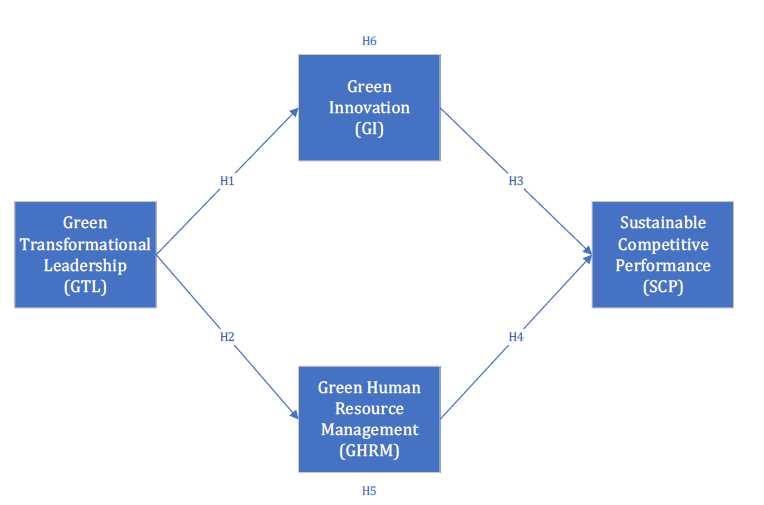
This study examines the impact of green transformational leadership (GTL) on sustainable competitive performance (SCP), with green innovation (GI) and green human resource management (GHRM) as mediating variables. Data were collected through a cross-sectional survey of management experts in the construction industry in Chongqing and analyzed using structural equation modeling (SEM). The results show that GTL has a positive and significant effect on both GI and GHRM, which in turn enhance SCP. Specifically, GTL positively influences GI (nonstandardized coefficient = 0.626, standardized coefficient = 0.456, p < 0.001) and GHRM (nonstandardized coefficient = 0.709, standardized coefficient = 0.482, p < 0.001). In addition, both GI (nonstandardized coefficient = 0.409, standardized coefficient = 0.424, p < 0.001) and GHRM (nonstandardized coefficient = 0.479, standardized coefficient = 0.532, p < 0.001) significantly improve SCP. These findings contribute to the literature on green management by providing empirical evidence that GTL enhances sustainable competitive performance through the combined mediating effects of green innovation and green human resource management. The study highlights the importance of integrating leadership, innovation, and human resource practices to achieve sustainability objectives. Practically, organizations should promote green transformational leadership to encourage innovation and align human resource policies with sustainability goals. Future studies are encouraged to investigate additional mediating mechanisms and contextual factors to further clarify how GTL influences competitive performance.
© 2026 The Authors. Published by IASE.
This is an
Keywords
Green transformational leadership, Sustainable competitive performance, Green innovation, Green human resource management, Construction industry
Article history
Received 28 August 2025, Received in revised form 21 February 2026, Accepted 26 February 2026
Acknowledgment
No Acknowledgment.
Compliance with ethical standards
Ethical considerations:
Informed consent was obtained from all participants prior to survey completion. Respondents were assured of confidentiality and anonymity, and participation was voluntary. No personally identifiable information was collected.
Conflict of interest: The author(s) declared no potential conflicts of interest with respect to the research, authorship, and/or publication of this article.Citation:
Junling L (2026). Investigating the impact of green transformational leadership on sustainable competitive performance: The mediating roles of green innovation and human resource management. International Journal of Advanced and Applied Sciences, 13(3): 11-20
Figures
Tables
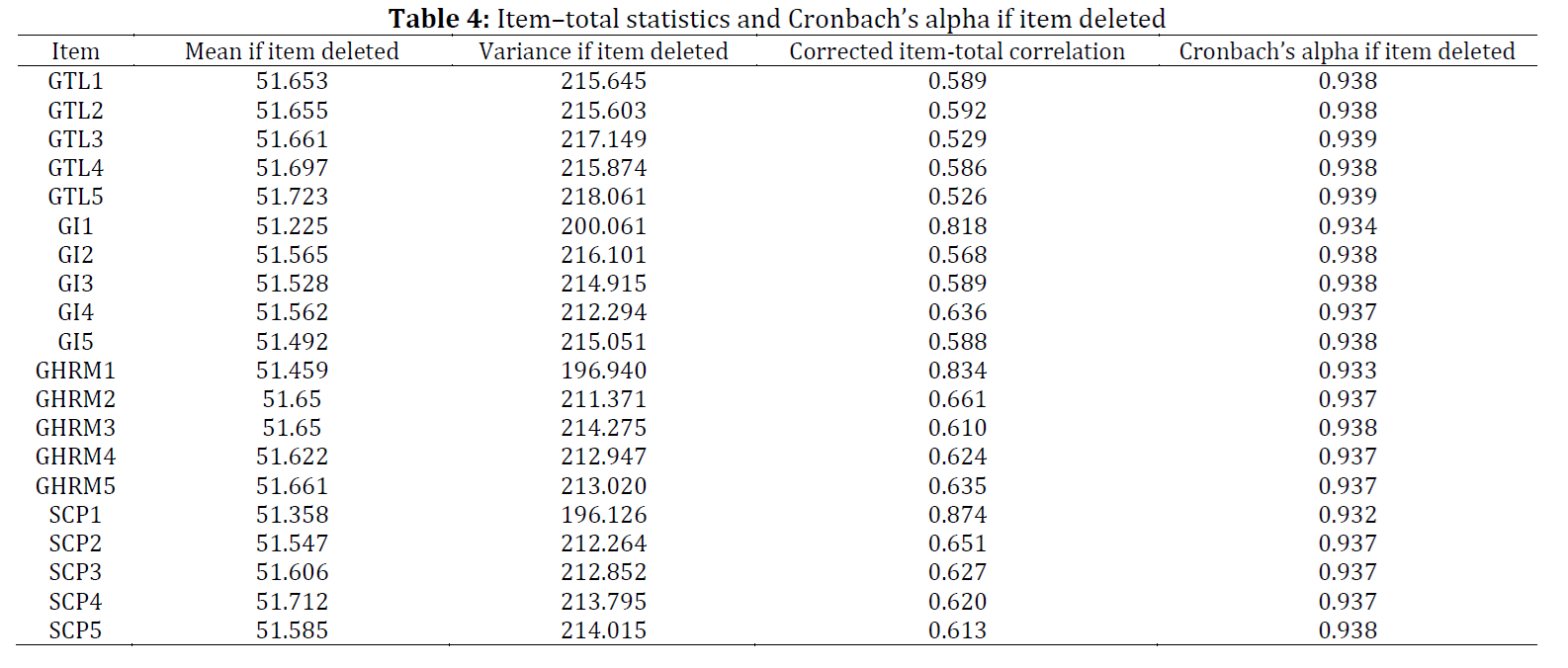
Table 1 Table 2 Table 3 Table 4 Table 5 Table 6



----------------------------------------------
References (21)
Al-Swidi AK, Gelaidan HM, and Saleh RM (2021). The joint impact of green human resource management, leadership and organizational culture on employees' green behaviour and organisational environmental performance. Journal of Cleaner Production, 316: 128112. https://doi.org/10.1016/j.jclepro.2021.128112 [Google Scholar]
Azam T, Songjiang W, Jamil K, Naseem S, and Mohsin M (2023). Measuring green innovation through total quality management and corporate social responsibility within SMEs: Green theory under the lens. The TQM Journal, 35(7): 1935-1959. https://doi.org/10.1108/TQM-05-2022-0160 [Google Scholar]
Bari N, Chimhundu R, and Chan KC (2022). Dynamic capabilities to achieve corporate sustainability: A roadmap to sustained competitive advantage. Sustainability, 14(3): 1531. https://doi.org/10.3390/su14031531 [Google Scholar]
Begum S, Ashfaq M, Xia E, and Awan U (2022a). Does green transformational leadership lead to green innovation? The role of green thinking and creative process engagement. Business Strategy and the Environment, 31(1): 580-597. https://doi.org/10.1002/bse.2911 [Google Scholar]
Begum S, Xia E, Ali F, Awan U, and Ashfaq M (2022b). Achieving green product and process innovation through green leadership and creative engagement in manufacturing. Journal of Manufacturing Technology Management, 33(4): 656-674. https://doi.org/10.1108/JMTM-01-2021-0003 [Google Scholar]
Bhat AA, Mir AA, Allie AH, Lone MA, Al-Adwan AS, Jamali D, and Riyaz I (2024). Unlocking corporate social responsibility and environmental performance: Mediating role of green strategy, innovation, and leadership. Innovation and Green Development, 3(2): 100112. https://doi.org/10.1016/j.igd.2023.100112 [Google Scholar]
Chen YS, Lai SB, and Wen CT (2006). The influence of green innovation performance on corporate advantage in Taiwan. Journal of Business Ethics, 67: 331-339. https://doi.org/10.1007/s10551-006-9025-5 [Google Scholar]
Dangelico RM and Pontrandolfo P (2015). Being 'green and competitive': The impact of environmental actions and collaborations on firm performance. Business Strategy and the Environment, 24(6): 413-430. https://doi.org/10.1002/bse.1828 [Google Scholar]
Farrukh M, Ansari N, Raza A, Wu Y, and Wang H (2022). Fostering employee's pro-environmental behavior through green transformational leadership, green human resource management and environmental knowledge. Technological Forecasting and Social Change, 179: 121643. https://doi.org/10.1016/j.techfore.2022.121643 [Google Scholar]
Gu S (2023). Green innovation: A way to enhance economic performance of Chinese hotels. International Journal of Innovation Science, 15(3): 406-426. https://doi.org/10.1108/IJIS-07-2021-0128 [Google Scholar]
Kline RB (2023). Principles and practice of structural equation modeling. Guilford Press, New York, USA. [Google Scholar]
Krejcie RV and Morgan DW (1970). Determining sample size for research activities. Educational and Psychological Measurement, 30(3): 607-610. https://doi.org/10.1177/001316447003000308 [Google Scholar]
Kwak SG and Kim JH (2017). Central limit theorem: The cornerstone of modern statistics. Korean Journal of Anesthesiology, 70(2): 144-156. https://doi.org/10.4097/kjae.2017.70.2.144 [Google Scholar] PMid:28367284 PMCid:PMC5370305
Liu R, Yue Z, Ijaz A, Lutfi A, and Mao J (2023). Sustainable business performance: Examining the role of green HRM practices, green innovation and responsible leadership through the lens of pro-environmental behavior. Sustainability, 15(9): 7317. https://doi.org/10.3390/su15097317 [Google Scholar]
Mi L, Gan X, Xu T, Long R, Qiao L, and Zhu H (2019). A new perspective to promote organizational citizenship behaviour for the environment: The role of transformational leadership. Journal of Cleaner Production, 239: 118002. https://doi.org/10.1016/j.jclepro.2019.118002 [Google Scholar]
Renwick DW, Redman T, and Maguire S (2013). Green human resource management: A review and research agenda. International Journal of Management Reviews, 15(1): 1-14. https://doi.org/10.1111/j.1468-2370.2011.00328.x [Google Scholar]
Robertson JL and Barling J (2013). Greening organizations through leaders' influence on employees' pro‐environmental behaviors. Journal of Organizational Behavior, 34(2): 176-194. https://doi.org/10.1002/job.1820 [Google Scholar]
Singh SK, Del Giudice M, Chierici R, and Graziano D (2020). Green innovation and environmental performance: The role of green transformational leadership and green human resource management. Technological Forecasting and Social Change, 150: 119762. https://doi.org/10.1016/j.techfore.2019.119762 [Google Scholar]
Srivastava S, Pathak D, Soni S, and Dixit A (2024). Does green transformational leadership reinforce green creativity? The mediating roles of green organizational culture and green mindfulness. Journal of Organizational Change Management, 37(3): 619-640. https://doi.org/10.1108/JOCM-09-2023-0364 [Google Scholar]
Sun X, El Askary A, Meo MS, and Hussain B (2022). Green transformational leadership and environmental performance in small and medium enterprises. Economic Research-Ekonomska Istraživanja, 35(1): 5273-5291. https://doi.org/10.1080/1331677X.2021.2025127 [Google Scholar]
- Zhao W and Huang L (2022). The impact of green transformational leadership, green HRM, green innovation and organizational support on the sustainable business performance: Evidence from China. Economic Research-Ekonomska Istraživanja, 35(1): 6121-6141. https://doi.org/10.1080/1331677X.2022.2047086 [Google Scholar]