
International
ADVANCED AND APPLIED SCIENCES
EISSN: 2313-3724, Print ISSN: 2313-626X
Frequency: 12


Volume 13, Issue 2 (February 2026), Pages: 57-69

----------------------------------------------
Original Research Paper
Intellectual property protection and entrepreneurship among ethnic minority youth in Vietnam’s Northern Midlands and Mountains
Author(s):
Affiliation(s):
1Office of the Lao Cai Provincial Party Committee, Lao Cai Province, Vietnam
2Institute for Economic Research and Human Resource Development, Thai Nguyen University of Economics and Business Administration, Thai Nguyen, Vietnam
Full text

* Corresponding Author.
 Corresponding author's ORCID profile: https://orcid.org/0000-0003-3062-620X
Digital Object Identifier (DOI)
https://doi.org/10.21833/ijaas.2026.02.007
Abstract
The aim of this research is to examine how intellectual property (IP) protection affects the entrepreneurial activities of ethnic minority youth in Vietnam’s Northern midland and mountainous regions, where access to innovation resources and markets is limited. Based on institutional theory, the resource-based view, and intellectual capital theory, the study develops and tests a conceptual model that considers both direct and indirect effects of IP protection. Survey data were collected from 386 youth-led enterprises, cooperatives, and startups, and Partial Least Squares Structural Equation Modeling (PLS-SEM) was used for analysis. The results indicate that IP protection has a significant positive effect on intellectual capital, entrepreneurial motivation, and innovation capability. However, only intellectual capital and innovation capability positively influence startup outcomes, while entrepreneurial motivation shows no significant effect. In addition, the moderating effects of social network cohesion and local policy support are not confirmed, suggesting a limited role of local interventions. Overall, the findings show that IP protection is effective mainly when it is transformed into knowledge-based resources and innovation capacity. The study recommends increasing IP awareness, simplifying IP registration processes, and strengthening capacity-building programs.
© 2026 The Authors. Published by IASE.
This is an
Keywords
Intellectual property protection, Intellectual capital, Innovation capability, Ethnic minority youth, Startup outcomes
Article history
Received 24 September 2025, Received in revised form 25 January 2026, Accepted 1 February 2026
Acknowledgment
This article is derived from the doctoral dissertation of PhD candidate Nguyen Hai Dang at the Thai Nguyen University of Economics and Business Administration. The authors gratefully acknowledge the valuable cooperation of local authorities, youth unions, and cooperatives in Vietnam’s Northern Midland and Mountainous provinces for their assistance in survey distribution and data collection. Their engagement greatly contributed to the successful completion of this research.
Compliance with ethical standards
Ethical considerations
All research activities involving human participants complied with the ethical standards of the institutional and national research committees, as well as the principles outlined in the Declaration of Helsinki. Prior to data collection, all participants were fully informed about the research objectives, procedures, and their rights to confidentiality and voluntary participation. Written informed consent was obtained from every respondent. The research protocol was reviewed and approved by the Research Ethics Committee of Thai Nguyen University of Economics and Business Administration, ensuring that data collection and analysis adhered to the highest ethical and professional standards.
Conflict of interest: The author(s) declared no potential conflicts of interest with respect to the research, authorship, and/or publication of this article.
Citation:
Dang NH and Nam VQ (2026). Intellectual property protection and entrepreneurship among ethnic minority youth in Vietnam’s Northern Midlands and Mountains. International Journal of Advanced and Applied Sciences, 13(2): 57-69
Figures
No Figure
Tables
Table 1 Table 2 Table 3 Table 4
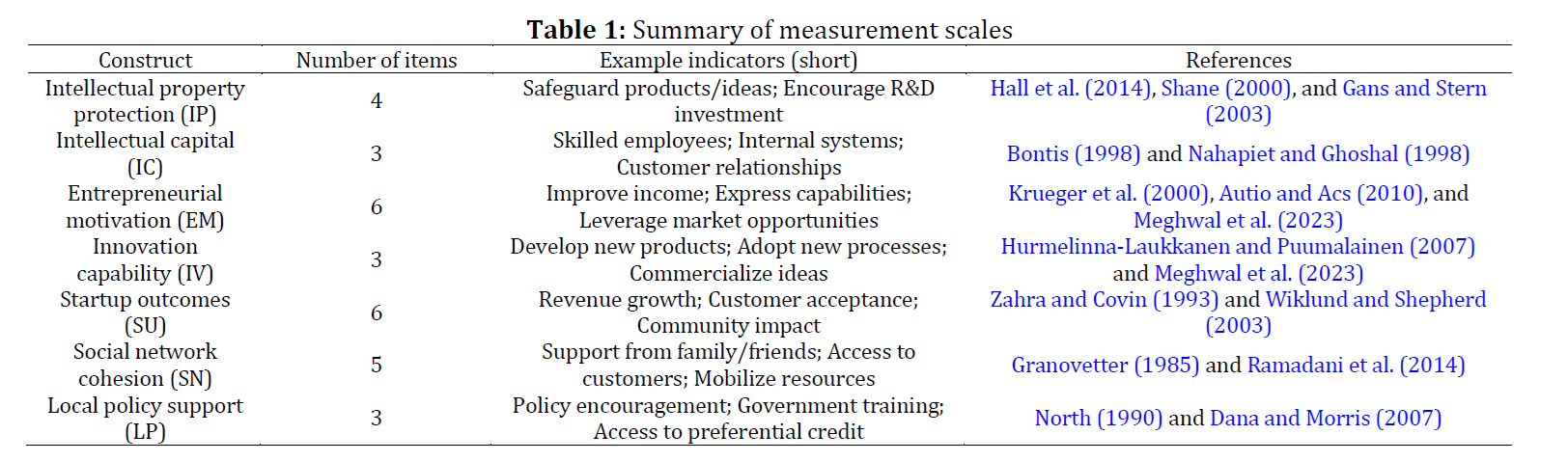
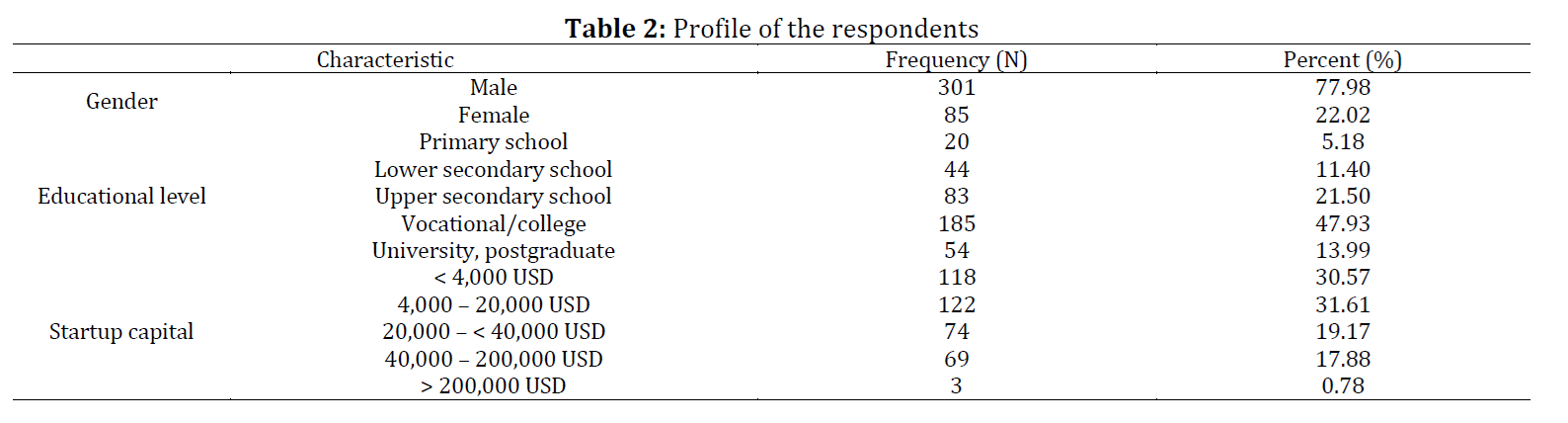

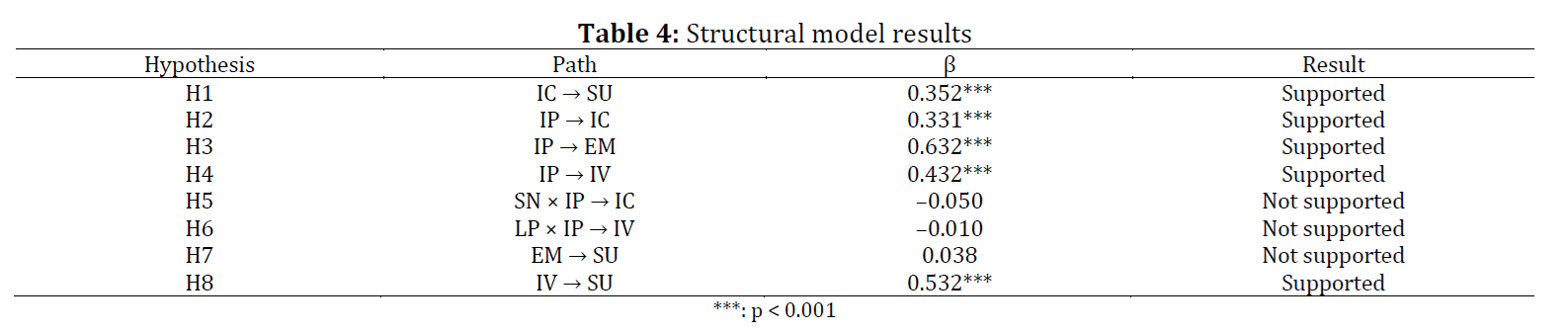
----------------------------------------------
References (27)
-
Autio E and Acs Z (2010). Intellectual property protection and the formation of entrepreneurial growth aspirations. Strategic Entrepreneurship Journal, 4(3): 234-251. https://doi.org/10.1002/sej.93 [ Google Scholar ]
-
Barney J (1991). Firm resources and sustained competitive advantage. Journal of Management, 17(1): 99-120. https://doi.org/10.1177/014920639101700108 [ Google Scholar ]
-
Blakeney M and Mengistie G (2011). Intellectual property and economic development in sub‐Saharan Africa. The Journal of World Intellectual Property, 14(3‐4): 238-264. https://doi.org/10.1111/j.1747-1796.2011.00417.x [ Google Scholar ]
-
Bontis N (1998). Intellectual capital: An exploratory study that develops measures and models. Management Decision, 36(2): 63-76. https://doi.org/10.1108/00251749810204142 [ Google Scholar ]
-
Campi M and Nuvolari A (2021). Intellectual property rights and agricultural development: Evidence from a worldwide index of IPRs in agriculture (1961-2018). The Journal of Development Studies, 57(4): 650-668. https://doi.org/10.1080/00220388.2020.1817395 [ Google Scholar ]
-
Dana LP and Morris M (2007). Towards a synthesis: A model of immigrant and ethnic entrepreneurship. In: Dana LP (Ed.), Handbook of research on ethnic minority entrepreneurship: A co-evolutionary view on resource management: 803–811. Edward Elgar, Cheltenham, UK. https://doi.org/10.4337/9781847209962.00060 [ Google Scholar ]
-
Etzkowitz H (2003). Research groups as 'quasi-firms': The invention of the entrepreneurial university. Research Policy, 32(1): 109-121. https://doi.org/10.1016/S0048-7333(02)00009-4 [ Google Scholar ]
-
Fornell C and Larcker DF (1981). Evaluating structural equation models with unobservable variables and measurement error. Journal of Marketing Research, 18(1): 39-50. https://doi.org/10.1177/002224378101800104 [ Google Scholar ]
-
Gans J and Stern S (2003). When does funding research by smaller firms bear fruit? Evidence from the SBIR program. Economics of Innovation and New Technology, 12(4): 361-384. https://doi.org/10.1080/1043859022000014092 [ Google Scholar ]
-
Granovetter M (1985). Economic action and social structure: The problem of embeddedness. American Journal of Sociology, 91(3): 481-510. https://doi.org/10.1086/228311 [ Google Scholar ]
-
Hair JF, Risher JJ, Sarstedt M, and Ringle CM (2019). When to use and how to report the results of PLS-SEM. European Business Review, 31(1): 2-24. https://doi.org/10.1108/EBR-11-2018-0203 [ Google Scholar ]
-
Hall B, Helmers C, Rogers M, and Sena V (2014). The choice between formal and informal intellectual property: A review. Journal of Economic Literature, 52(2): 375-423. https://doi.org/10.1257/jel.52.2.375 [ Google Scholar ]
-
Henseler J, Hubona G, and Ray PA (2016). Using PLS path modeling in new technology research: Updated guidelines. Industrial Management & Data Systems, 116(1): 2-20. https://doi.org/10.1108/IMDS-09-2015-0382 [ Google Scholar ]
-
Hurmelinna‐Laukkanen P and Puumalainen K (2007). Nature and dynamics of appropriability: Strategies for appropriating returns on innovation. R&D Management, 37(2): 95-112. https://doi.org/10.1111/j.1467-9310.2007.00460.x [ Google Scholar ]
-
Kaufmann L and Schneider Y (2004). Intangibles: A synthesis of current research. Journal of Intellectual Capital, 5(3): 366-388. https://doi.org/10.1108/14691930410550354 [ Google Scholar ]
-
Krueger NF Jr, Reilly MD, and Carsrud AL (2000). Competing models of entrepreneurial intentions. Journal of Business Venturing, 15(5-6): 411-432. https://doi.org/10.1016/S0883-9026(98)00033-0 [ Google Scholar ]
-
Meghwal ML, Dhurve L, Raj S, Afreen N, Tripathi S, Maurya DK, and Kumar A (2023). A comprehensive review on the impacts of intellectual property rights on the global agricultural economy. Asian Journal of Agricultural Extension, Economics & Sociology, 41(12): 160-173. https://doi.org/10.9734/ajaees/2023/v41i122316 [ Google Scholar ]
-
Nahapiet J and Ghoshal S (1998). Social capital, intellectual capital, and the organizational advantage. Academy of Management Review, 23(2): 242-266. https://doi.org/10.2307/259373 [ Google Scholar ]
-
North DC (1990). Institutions, institutional change and economic performance. Cambridge University Press, Cambridge, UK. https://doi.org/10.1017/CBO9780511808678 [ Google Scholar ]
-
Oosterbeek H, van Praag M, and Ijsselstein A (2010). The impact of entrepreneurship education on entrepreneurship skills and motivation. European Economic Review, 54(3): 442-454. https://doi.org/10.1016/j.euroecorev.2009.08.002 [ Google Scholar ]
-
Puffer SM, McCarthy DJ, and Boisot M (2010). Entrepreneurship in Russia and China: The impact of formal institutional voids. Entrepreneurship Theory and Practice, 34(3): 441-467. https://doi.org/10.1111/j.1540-6520.2009.00353.x [ Google Scholar ]
-
Ramadani V, Rexhepi G, Gërguri-Rashiti S, Ibraimi S, and Dana LP (2014). Ethnic entrepreneurship in Macedonia: The case of Albanian entrepreneurs. International Journal of Entrepreneurship and Small Business, 23(3): 313-335. https://doi.org/10.1504/IJESB.2014.065525 [ Google Scholar ]
-
Ren D, Song W, and Ge Z (2017). The study of agricultural intellectual property and intelligent agriculture development strategies in China. Journal of Service Science and Management, 10(3): 230-250. https://doi.org/10.4236/jssm.2017.103020 [ Google Scholar ]
-
Shane S (2000). Prior knowledge and the discovery of entrepreneurial opportunities. Organization Science, 11(4): 448-469. https://doi.org/10.1287/orsc.11.4.448.14602 [ Google Scholar ]
-
Thompson MA and Rushing FW (1999). An empirical analysis of the impact of patent protection on economic growth: An extension. Journal of Economic Development, 24(1): 67-76. [ Google Scholar ]
-
Wiklund J and Shepherd D (2003). Knowledge‐based resources, entrepreneurial orientation, and the performance of small and medium‐sized businesses. Strategic Management Journal, 24(13): 1307-1314. https://doi.org/10.1002/smj.360 [ Google Scholar ]
- Zahra SA and Covin JG (1993). Business strategy, technology policy and firm performance. Strategic Management Journal, 14(6): 451-478. https://doi.org/10.1002/smj.4250140605 [ Google Scholar ]