International
ADVANCED AND APPLIED SCIENCES
EISSN: 2313-3724, Print ISSN: 2313-626X
Frequency: 12


Volume 13, Issue 1 (January 2026), Pages: 228-238

----------------------------------------------
Original Research Paper
Development and validation of a scale for evaluating STEM faculty teaching effectiveness in higher education
Author(s):
Affiliation(s):
Department of Mathematics and Statistics, Cebu Technological University, Cebu, Philippines
Full text

* Corresponding Author.
 Corresponding author's ORCID profile: https://orcid.org/0000-0001-5321-2371
Digital Object Identifier (DOI)
https://doi.org/10.21833/ijaas.2026.01.024
Abstract
This study aimed to develop and validate a scale for assessing STEM faculty teaching effectiveness and improving educational outcomes in STEM disciplines. The study is grounded in the principles of Outcomes-Based Education (OBE) and Outcomes-Based Teaching and Learning (OBTL) and aligns intended learning outcomes, teaching and learning activities, and assessment tasks. A sequential exploratory mixed-methods design, with qualitative methods followed by quantitative methods, was employed. Administrators and faculty members participated in the development and validation of the STEM Faculty Teaching Effectiveness Scale for higher education. The scale showed excellent inter-rater agreement, as indicated by Cohen’s Kappa. Exploratory factor analysis identified three main factors: Communicating Intended Learning Outcomes, Facilitating Teaching and Learning Activities, and Implementing Assessment Tasks. Confirmatory factor analysis using the Maximum Likelihood method was then conducted. The results showed good model fit for Model 2 (CFI = 0.9260; TLI = 0.9170; RMSEA = 0.0610; SRMR = 0.0471; χ²/df = 1.8070), supporting the three-factor structure. Reliability analysis indicated high internal consistency, with a Cronbach’s alpha value of 0.953. The final instrument consists of 28 items and is recommended for use by higher education institutions to evaluate STEM faculty teaching effectiveness.
© 2026 The Authors. Published by IASE.
This is an
Keywords
Teaching effectiveness, STEM education, Scale development, Outcomes-based education, Higher education
Article history
Received 2 September 2025, Received in revised form 10 January 2026, Accepted 19 January 2026
Acknowledgment
This research was funded by the Office of the Vice President for Research and Development of Cebu Technological University.
Compliance with ethical standards
Ethical considerations
This study was conducted in accordance with established ethical principles of research. Ethical approval was obtained from the Research Ethics Committee (REC; CNU-REC Code 1037/2024-05 Angco). Participation was voluntary, with informed consent obtained from all participants. Participants were informed of the study’s purpose and their right to withdraw at any time. Confidentiality and anonymity were ensured through the removal of personal identifiers and secure data storage.
Conflict of interest: The author(s) declared no potential conflicts of interest with respect to the research, authorship, and/or publication of this article.
Citation:
Angco RJN and Angco MLB (2026). Development and validation of a scale for evaluating STEM faculty teaching effectiveness in higher education. International Journal of Advanced and Applied Sciences, 13(1): 228-238
Figures


Tables
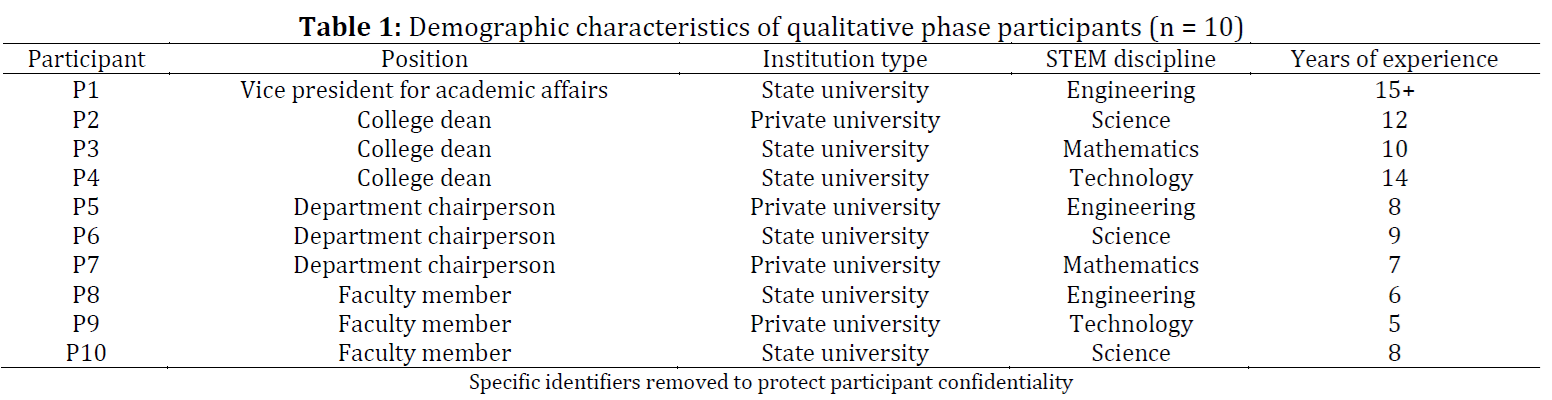
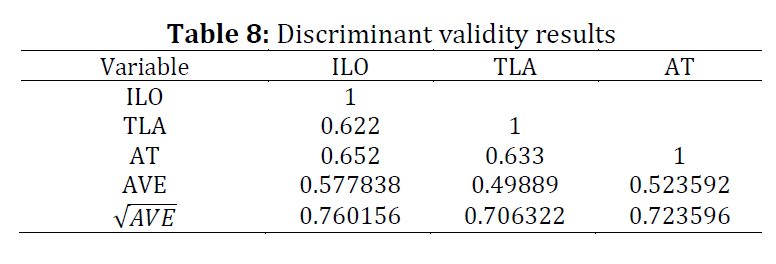
Table 1 Table 2 Table 3 Table 4 Table 5 Table 6 Table 7 Table 8




----------------------------------------------
References (14)
- Allen M, Webb AW, and Matthews CE (2016). Adaptive teaching in STEM: Characteristics for effectiveness. Theory into Practice, 55(3): 217-224. https://doi.org/10.1080/00405841.2016.1173994 [Google Scholar]
- Asim HM, Vaz A, Ahmed A, and Sadiq S (2021). A review on outcome based education and factors that impact student learning outcomes in tertiary education system. International Education Studies, 14(2): 1-11. https://doi.org/10.5539/ies.v14n2p1 [Google Scholar]
- Barry AE, Chaney EH, Stellefson ML, and Chaney JD (2011). So you want to develop a survey: Practical recommendations for scale development. American Journal of Health Studies, 26: 97-105. [Google Scholar]
- Biggs J (1996). Enhancing teaching through constructive alignment. Higher Education, 32: 347-364. https://doi.org/10.1007/BF00138871 [Google Scholar]
- Braun V and Clarke V (2006). Using thematic analysis in psychology. Qualitative Research in Psychology, 3(2): 77-101. https://doi.org/10.1191/1478088706qp063oa [Google Scholar]
- Fornell C and Larcker DF (1981). Evaluating structural equation models with unobservable variables and measurement error. Journal of Marketing Research, 18(1): 39-50. https://doi.org/10.1177/002224378101800104 [Google Scholar]
- Gefen D, Straub D, and Boudreau MC (2000). Structural equation modeling and regression: Guidelines for research practice. Communications of the Association for Information Systems, 4: 7. https://doi.org/10.17705/1CAIS.00407 [Google Scholar]
- Hair JF Jr, Black WC, Babin BJ, and Anderson RE (2010). Multivariate data analysis. 7th Edition, Pearson Prentice Hall, Upper Saddle River, USA. [Google Scholar]
- Karpudewan M, Krishnan P, Ali MN, and Yoon Fah L (2022). Designing instrument to measure STEM teaching practices of Malaysian teachers. PLOS ONE, 17(5): e0268509. https://doi.org/10.1371/journal.pone.0268509 [Google Scholar] PMid:35594272 PMCid:PMC9122257
- Landrum RE, Viskupic K, Shadle SE, and Bullock D (2017). Assessing the STEM landscape: The current instructional climate survey and the evidence-based instructional practices adoption scale. International Journal of STEM Education, 4: 25. https://doi.org/10.1186/s40594-017-0092-1 [Google Scholar] PMid:30631681 PMCid:PMC6310375
- Mufanti R, Carter D, and England N (2024). Outcomes-based education in Indonesian higher education: Reporting on the understanding, challenges, and support available to teachers. Social Sciences and Humanities Open, 9: 100873. https://doi.org/10.1016/j.ssaho.2024.100873 [Google Scholar]
- Srinivasan R, Lilien GL, and Rangaswamy A (2002). Technological opportunism and radical technology adoption: An application to e-business. Journal of Marketing, 66(3): 47-60. https://doi.org/10.1509/jmkg.66.3.47.18508 [Google Scholar]
- Sturtevant H and Wheeler L (2019). The STEM faculty instructional barriers and identity survey (FIBIS): Development and exploratory results. International Journal of STEM Education, 6: 35. https://doi.org/10.1186/s40594-019-0185-0 [Google Scholar]
- Yang KL, Wu HK, Yeh YF, Lin KY, Wu JY, and Hsu YS (2023). Implementers, designers, and disseminators of integrated STEM activities: Self-efficacy and commitment. Research in Science and Technological Education, 41(4): 1433-1451. https://doi.org/10.1080/02635143.2021.2008343 [Google Scholar]