
International
ADVANCED AND APPLIED SCIENCES
EISSN: 2313-3724, Print ISSN: 2313-626X
Frequency: 12


Volume 13, Issue 1 (January 2026), Pages: 134-143

----------------------------------------------
Original Research Paper
Generation Z Muslim loyalty toward e-commerce: Evidence from Indonesia
Author(s):
Affiliation(s):
1Department of Islamic Economic Law, Faculty of Islamic Studies, Universitas Muhammadiyah Surakarta, Surakarta City, Indonesia
2Department of Informatics Engineering, Faculty of Communication and Informatics, Universitas Muhammadiyah Surakarta, Surakarta City, Indonesia
Full text

* Corresponding Author.
 Corresponding author's ORCID profile: https://orcid.org/0000-0001-9063-6990
Digital Object Identifier (DOI)
https://doi.org/10.21833/ijaas.2026.01.014
Abstract
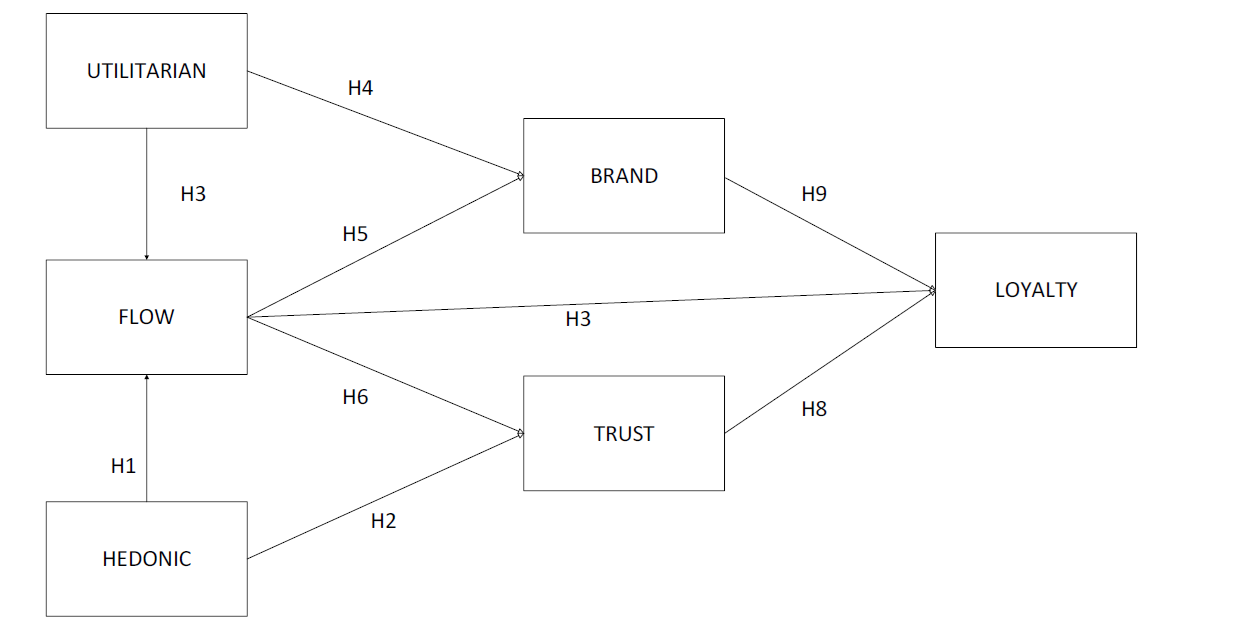
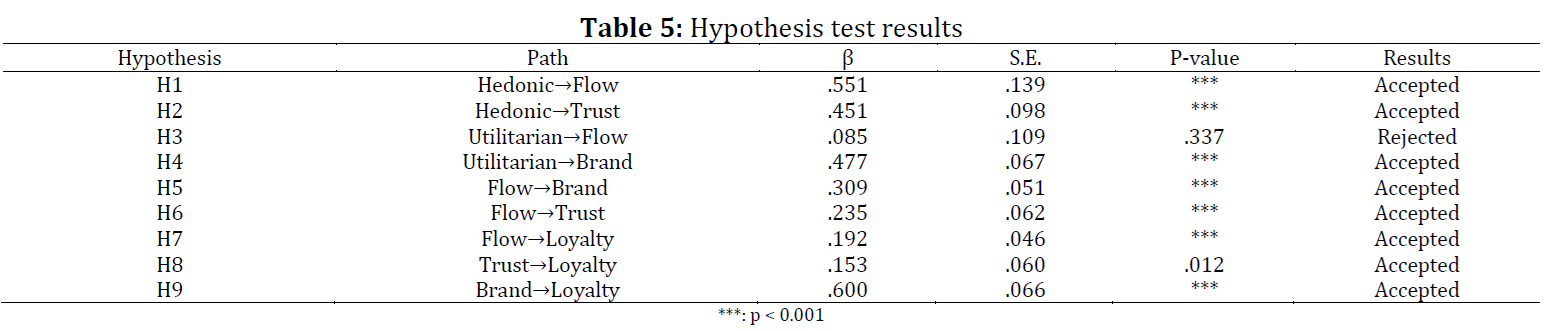
Research on e-commerce loyalty among Muslim consumers has become increasingly important due to the large size of the Muslim market in Muslim-majority countries. However, the relationship between technological features and consumer characteristics remains underexplored. This study investigates the factors influencing the loyalty of Generation Z Muslim consumers toward e-commerce platforms. A survey was conducted in 2025 among Generation Z university students (born between 1997 and 2012) in Central Java. Quantitative data were collected through an online questionnaire completed by 315 highly educated Muslim respondents. Structural Equation Modeling (SEM) was used to test the proposed research model. The results show that Generation Z loyalty is positively influenced by brand equity (β = 0.600), trust (β = 0.153), and flow experience (β = 0.192), with brand equity identified as the strongest determinant of loyalty. In the e-commerce context, brand equity is significantly enhanced by utilitarian features (β = 0.477) and flow experience (β = 0.309). Improving these factors strengthens brand equity, which subsequently leads to higher consumer loyalty.
© 2026 The Authors. Published by IASE.
This is an
Keywords
Generation Z loyalty, Muslim consumers, E-commerce platforms, Brand equity, Flow experience
Article history
Received 22 August 2025, Received in revised form 23 December 2025, Accepted 1 January 2026
Acknowledgment
The authors would like to thank the Research and Innovation Institute (LRI), Universitas Muhammadiyah Surakarta, for the enormous financial support in writing this study through the funding scheme of the 2025 Outstanding Research of Study Program (RU-PRODI) with contract number 95.49/A.3-III/LRI/IV/2025.
Compliance with ethical standards
Ethical considerations
This study was conducted in compliance with ethical standards for social science research in Indonesia. The research procedures adhered to the principles outlined in the Indonesian National Guidelines for Research Ethics (Pedoman Etika Penelitian Nasional) issued by the Ministry of Education, Culture, Research, and Technology of the Republic of Indonesia.
Conflict of interest: The author(s) declared no potential conflicts of interest with respect to the research, authorship, and/or publication of this article.
Citation:
Febriandika NR, Rosyadi I, Hakim L, Imaduddin H, and Kurniawati NN (2026). Generation Z Muslim loyalty toward e-commerce: Evidence from Indonesia. International Journal of Advanced and Applied Sciences, 13(1): 134-143
Figures
Tables
Table 1 Table 2 Table 3 Table 4 Table 5

----------------------------------------------
References (28)
- Albayrak T, Karasakal S, Kocabulut Ö, and Dursun A (2020). Customer loyalty towards travel agency websites: The role of trust and hedonic value. Journal of Quality Assurance in Hospitality and Tourism, 21(1): 50-77. https://doi.org/10.1080/1528008X.2019.1619497 [Google Scholar]
- Aminnuddin NA and Hamid HSA (2021). Predictors of deviant behavior justification among Muslims: Sociodemographic factors, subjective well-being, and perceived religiousness. Islamic Guidance and Counseling Journal, 4(2): 144-157. https://doi.org/10.25217/igcj.v4i2.1814 [Google Scholar]
- Aro-Gordon S (2022). Structural equation modelling approach to evaluating capital budgeting factors in Oman. GATR Journal of Finance and Banking Review, 7(2): 107–121. https://doi.org/10.35609/jfbr.2022.7.2(2) [Google Scholar]
- Auliaramadhan N, Asnawi HF, and Khaliq R (2024). Impulse buying behavior of Generation Z urban Muslims on Shopee. Equilibrium: Jurnal Ekonomi Syariah, 12(1): 171-196. https://doi.org/10.21043/equilibrium.v12i1.22051 [Google Scholar]
- Azizan NS and Yusr MM (2019). The influence of customer satisfaction, brand trust, and brand image towards customer loyalty. International Journal of Entrepreneurship and Management Practices, 2(7): 93-108. https://doi.org/10.35631/ijemp.270010 [Google Scholar]
- Bangsa AB and Schlegelmilch BB (2020). Linking sustainable product attributes and consumer decision-making: Insights from a systematic review. Journal of Cleaner Production, 245: 118902. https://doi.org/10.1016/j.jclepro.2019.118902 [Google Scholar]
- Bilgihan A (2016). Gen Y customer loyalty in online shopping: An integrated model of trust, user experience and branding. Computers in Human Behavior, 61: 103-113. https://doi.org/10.1016/j.chb.2016.03.014 [Google Scholar]
- Bilgihan A and Bujisic M (2015). The effect of website features in online relationship marketing: A case of online hotel booking. Electronic Commerce Research and Applications, 14(4): 222-232. https://doi.org/10.1016/j.elerap.2014.09.001 [Google Scholar]
- Castro-González S, Bande B, and Fernández-Ferrín P (2021). Influence of companies credibility and trust in corporate social responsibility aspects of consumer food products: The moderating intervention of consumer integrity. Sustainable Production and Consumption, 28: 129-141. https://doi.org/10.1016/j.spc.2021.03.032 [Google Scholar]
- Ertemel AV, Civelek ME, Eroğlu Pektaş GÖ, and Çemberci M (2021). The role of customer experience in the effect of online flow state on customer loyalty. PLOS ONE, 16(7): e0254685. https://doi.org/10.1371/journal.pone.0254685 [Google Scholar] PMid:34264997 PMCid:PMC8282012
- Evelina TY, Kusumawati A, and Nimran U (2020). The influence of utilitarian value, hedonic value, social value, and perceived risk on customer satisfaction: Survey of e-commerce customers in Indonesia. Business: Theory and Practice, 21(2): 613-622. https://doi.org/10.3846/btp.2020.12143 [Google Scholar]
- Faizah N and Aisyah MR (2023). Sharia compliance and trust: Online purchase intentions of Generation Z in e-commerce. International Journal of Islamic Economics, 5(02): 79-90. https://doi.org/10.32332/ijie.v5i02.7696 [Google Scholar]
- Febriandika NR and Azman SMMS (2025). Purchase intention of millennial Muslims toward B2C e-commerce. Innovative Marketing, 21(1): 129-141. https://doi.org/10.21511/im.21(1).2025.11 [Google Scholar]
- Febriandika NR, Wijaya V, and Hakim L (2023). Gen-Z Muslims' purchase intention of halal food: Evidence from Indonesia. Innovative Marketing, 19(1): 13-25. https://doi.org/10.21511/im.19(1).2023.02 [Google Scholar]
- Ishak S, Che Omar AR, Khalid K, Ab. Ghafar IS, and Hussain MY (2020). Cosmetics purchase behavior of educated millennial Muslim females. Journal of Islamic Marketing, 11(5): 1055-1071. https://doi.org/10.1108/JIMA-01-2019-0014 [Google Scholar]
- Islam M (2024). What fad apparel Generation Z consumers purchase in Kolkata? A study of selected fast fashion brands. International Research Journal of Multidisciplinary Scope, 5(1): 289–300. https://doi.org/10.47857/irjms.2024.v05i01.0206 [Google Scholar]
- Izogo EE and Jayawardhena C (2018). Online shopping experience in an emerging e-retailing market. Journal of Research in Interactive Marketing, 12(2): 193-214. https://doi.org/10.1108/JRIM-02-2017-0015 [Google Scholar]
- Maqsood K and Javed I (2019). Impulse buying, consumer's satisfaction and brand loyalty. Journal of Economic Impact, 1(2): 40-47. https://doi.org/10.52223/jei0102192 [Google Scholar]
- Moslehpour M, Pham VK, Wong WK, and Bilgiçli İ (2018). E-purchase intention of Taiwanese consumers: Sustainable mediation of perceived usefulness and perceived ease of use. Sustainability, 10(1): 234. https://doi.org/10.3390/su10010234 [Google Scholar]
- Novak TP, Hoffman DL, and Yung YF (2000). Measuring the customer experience in online environments: A structural modeling approach. Marketing Science, 19(1): 22-42. https://doi.org/10.1287/mksc.19.1.22.15184 [Google Scholar]
- Nusair KK, Bilgihan A, Okumus F, and Cobanoglu C (2013). Generation Y travelers' commitment to online social network websites. Tourism Management, 35: 13-22. https://doi.org/10.1016/j.tourman.2012.05.005 [Google Scholar]
- Polas MRH, Raju V, Hossen SM, Karim AM, and Tabash MI (2022). Customer's revisit intention: Empirical evidence on Gen‐Z from Bangladesh towards halal restaurants. Journal of Public Affairs, 22(3): e2572. https://doi.org/10.1002/pa.2572 [Google Scholar]
- Pratika Y and Sutikno B (2017). An examination of e-loyalty of Indonesian millennial traveler on the using of online travel agent (OTA). PEOPLE: International Journal of Social Sciences, 3(2): 2295-2317. https://doi.org/10.20319/pijss.2017.32.22952317 [Google Scholar]
- Saeed M and Azmi IBAG (2019). The nexus between customer equity and brand switching behaviour of millennial Muslim consumers. South Asian Journal of Business Studies, 8(1): 62-80. https://doi.org/10.1108/SAJBS-04-2018-0046 [Google Scholar]
- Soni P and Vohra J (2023). Comparing online retail loyalty segments of Indian Gen Z buyers. International Journal of Productivity and Performance Management, 72(9): 2717-2735. https://doi.org/10.1108/IJPPM-08-2021-0458 [Google Scholar]
- Taber KS (2018). The use of Cronbach's alpha when developing and reporting research instruments in science education. Research in Science Education, 48: 1273-1296. https://doi.org/10.1007/s11165-016-9602-2 [Google Scholar]
- Ting L and Ahn J (2023). Understanding the roles of interaction and trust in formation of loyalty toward customer-to-customer (C2C) platforms. Asia Pacific Journal of Marketing and Logistics, 35(10): 2565-2581. https://doi.org/10.1108/APJML-12-2022-1072 [Google Scholar]
- Urdea AM and Constantin CP (2021). Exploring the impact of customer experience on customer loyalty in e-commerce. Proceedings of the International Conference on Business Excellence, 15(1): 672-682. https://doi.org/10.2478/picbe-2021-0063 [Google Scholar]