International
ADVANCED AND APPLIED SCIENCES
EISSN: 2313-3724, Print ISSN: 2313-626X
Frequency: 12


Volume 13, Issue 1 (January 2026), Pages: 53-64

----------------------------------------------
Original Research Paper
Enhancing conflict resolution skills through artificial intelligence-based problem-based learning in civic education at Indonesian secondary schools
Author(s):
Affiliation(s):
1Department of Civic Education, Faculty of Social and Political Sciences, Universitas Negeri Yogyakarta, Yogyakarta, Indonesia
2Department of Educational Technology, Faculty of Education, Universitas Negeri Yogyakarta, Yogyakarta, Indonesia
Full text

* Corresponding Author.
 Corresponding author's ORCID profile: https://orcid.org/0009-0004-7067-0330
Digital Object Identifier (DOI)
https://doi.org/10.21833/ijaas.2026.01.006
Abstract
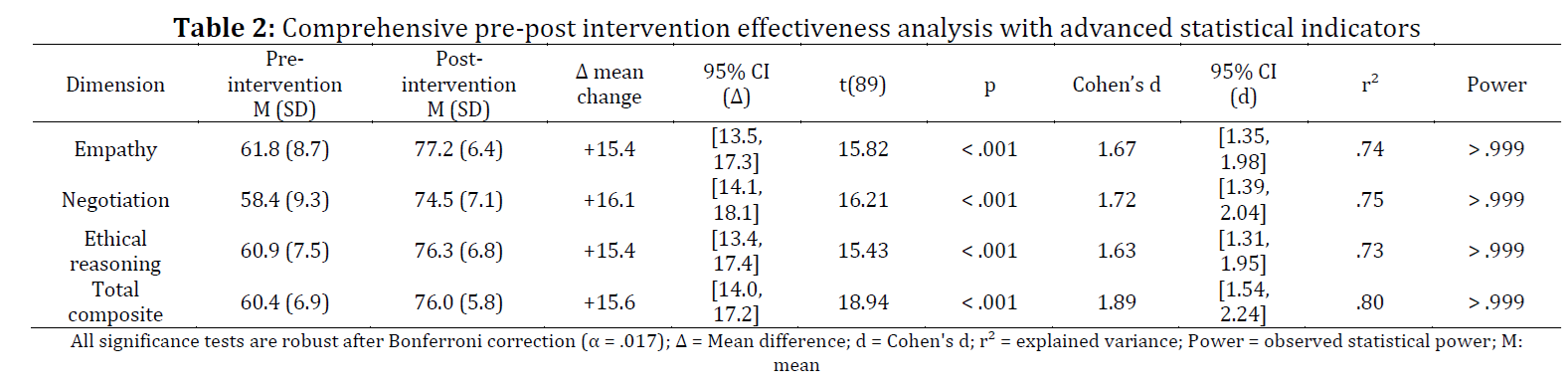
Traditional civic education in Indonesia does not sufficiently develop practical conflict resolution skills among adolescents. This gap contributes to ongoing social tensions in diverse communities, where democratic skills are essential for social cohesion. This quasi-experimental study examined whether Artificial Intelligence–enhanced Problem-Based Learning (AI-PBL) could improve conflict resolution skills among 90 eleventh-grade students in three urban schools in Yogyakarta, Indonesia. The intervention used a natural language processing system to present culturally relevant conflict scenarios, provide real-time adaptive feedback, and create personalized learning pathways across six structured sessions. Conflict resolution skills were measured in three areas—empathy, peaceful negotiation, and ethical reasoning—using a 24-item instrument with good reliability (Cronbach’s α = .86). The results showed significant improvements in empathy (Cohen’s d = 1.67), negotiation (d = 1.72), and ethical reasoning (d = 1.63), all with p < .001. Bayesian analysis gave strong evidence of effectiveness (BF₁₀ > 1000), and regression analysis showed the largest benefits for students who initially performed at lower levels. However, because this was a single-group design, stronger causal conclusions require future randomized controlled trials.
© 2025 The Authors. Published by IASE.
This is an
Keywords
Conflict resolution, Civic education, Problem-based learning, Artificial intelligence, Adolescents
Article history
Received 5 June 2025, Received in revised form 6 November 2025, Accepted 14 December 2025
Acknowledgment
We would like to express our gratitude to Universitas Negeri Yogyakarta for supporting this research.
Compliance with ethical standards
Ethical considerations
This study received approval from the Institutional Review Board of Yogyakarta State University through a research permit (Number: B/3360/UN34.14/PT.01.04/2025). All participating students and their legal guardians provided informed consent. Participation was voluntary, data were anonymized, and all procedures complied with ethical standards for research involving human participants.
Conflict of interest: The author(s) declared no potential conflicts of interest with respect to the research, authorship, and/or publication of this article.
Citation:
Nadziroh N, Sunarso S, and Suyato S (2026). Enhancing conflict resolution skills through artificial intelligence-based problem-based learning in civic education at Indonesian secondary schools. International Journal of Advanced and Applied Sciences, 13(1): 53-64
Figures
No Figure
Tables
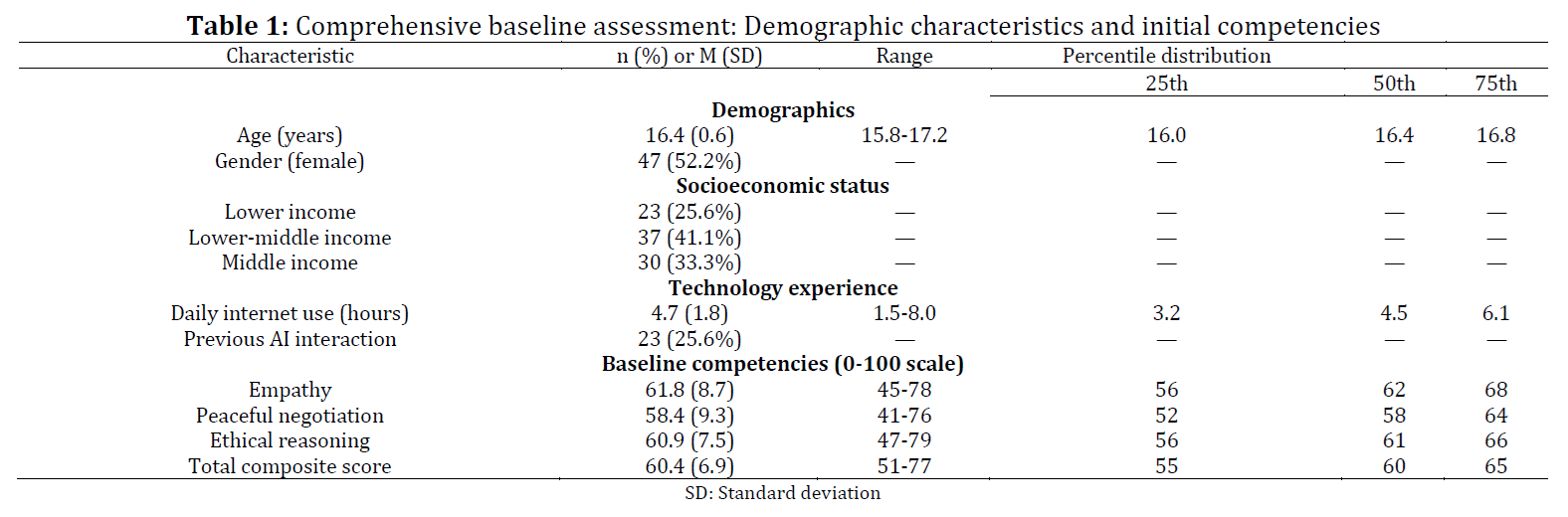
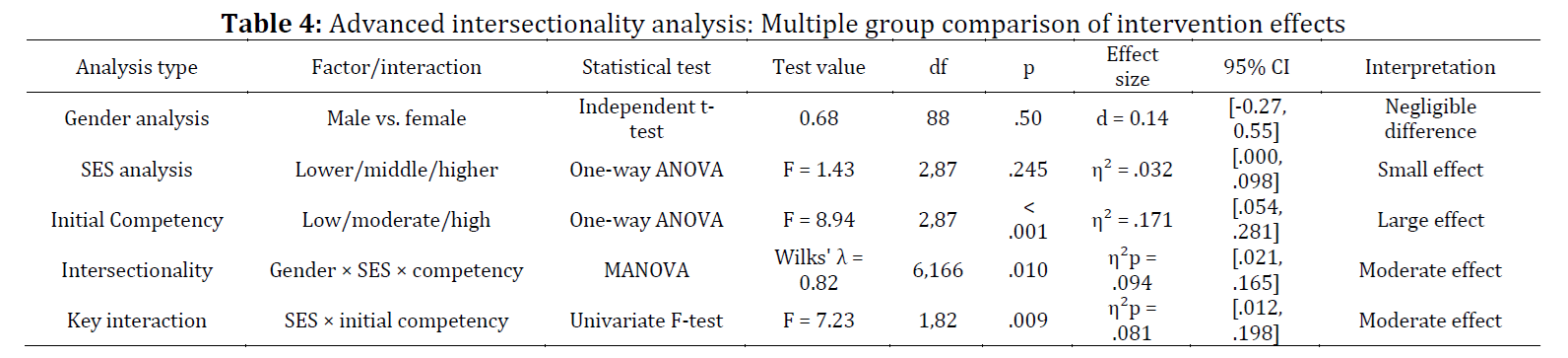
Table 1 Table 2 Table 3 Table 4 Table 5 Table 6 Table 7 Table 8 Table 9 Table 10 Table 11 Table 12 Table 13





----------------------------------------------
References (16)
- Chen L, Chen P, and Lin Z (2020). Artificial intelligence in education: A review. IEEE Access, 8: 75264–75278. https://doi.org/10.1109/ACCESS.2020.2988510 [Google Scholar]
- Darling-Hammond L, Flook L, Cook-Harvey C, Barron B, and Osher D (2020). Implications for educational practice of the science of learning and development. Applied Developmental Science, 24(2): 97–140. https://doi.org/10.1080/10888691.2018.1537791 [Google Scholar]
- D'Mello S and Graesser A (2012). Dynamics of affective states during complex learning. Learning and Instruction, 22(2): 145–157. https://doi.org/10.1016/j.learninstruc.2011.10.001 [Google Scholar]
- Gelman A and Vehtari A (2021). What are the most important statistical ideas of the past 50 years? Journal of the American Statistical Association, 116(536): 2087-2097. https://doi.org/10.1080/01621459.2021.1938081 [Google Scholar]
- Hattie J (2009). Visible learning: A synthesis of over 800 meta-analyses relating to achievement. 1st Edition, Routledge, London, UK. https://doi.org/10.4324/9780203887332 [Google Scholar]
- Holmes W, Bialik M, and Fadel C (2019). Artificial intelligence in education: Promises and implications for teaching and learning. Center for Curriculum Redesign, Boston, USA. [Google Scholar]
- McLaren BM, Adams DM, Mayer RE, and Forlizzi J (2017). A computer-based game that promotes mathematics learning more than a conventional approach. International Journal of Game-Based Learning, 7(1): 36–56. https://doi.org/10.4018/IJGBL.2017010103 [Google Scholar]
- Nye BD, Graesser AC, and Hu X (2014). AutoTutor and family: A review of 17 years of natural language tutoring. International Journal of Artificial Intelligence in Education, 24: 427–469. https://doi.org/10.1007/s40593-014-0029-5 [Google Scholar]
- Parker L and Hoon CY (2013). Secularity, religion and the possibilities for religious citizenship. Asian Journal of Social Science, 41(2): 150–174. https://doi.org/10.1163/15685314-12341296 [Google Scholar]
- Provoost S, Lau HM, Ruwaard J, and Riper H (2017). Embodied conversational agents in clinical psychology: A scoping review. Journal of Medical Internet Research, 19(5): e151. https://doi.org/10.2196/jmir.6553 [Google Scholar] PMid:28487267 PMCid:PMC5442350
- Rus V, D'Mello S, Hu X, and Graesser AC (2013). Recent advances in conversational intelligent tutoring systems. AI Magazine, 34(3): 42–54. https://doi.org/10.1609/aimag.v34i3.2485 [Google Scholar]
- Schmidt HG, Rotgans JI, and Yew EHJ (2011). The process of problem-based learning: What works and why. Medical Education, 45(8): 792–806. https://doi.org/10.1111/j.1365-2923.2011.04035.x [Google Scholar] PMid:21752076
- Sukma MD, Dhiarni YI, Kusniati R, Wiyatmo Y, and Kuswanto H (2025). Systematic literature review: Analysis of problem-solving skill trends in physics education (2014-2024). Jurnal Riset dan Kajian Pendidikan Fisika, 12(1): 41-49. https://doi.org/10.12928/jrkpf.v12i1.1145 [Google Scholar]
- VanLehn K (2011). The relative effectiveness of human tutoring, intelligent tutoring systems, and other tutoring systems. Educational Psychologist, 46(4): 197–221. https://doi.org/10.1080/00461520.2011.611369 [Google Scholar]
- Vygotsky LS (1978). Mind in society: The development of higher psychological processes. Harvard University Press, Cambridge, USA. [Google Scholar]
- Walker A and Leary H (2009). A problem-based learning meta analysis: Differences across problem types, implementation types, disciplines, and assessment levels. The Interdisciplinary Journal of Problem-Based Learning, 3(1): 12–43. https://doi.org/10.7771/1541-5015.1061 [Google Scholar]