
International
ADVANCED AND APPLIED SCIENCES
EISSN: 2313-3724, Print ISSN: 2313-626X
Frequency: 12


Volume 12, Issue 12 (December 2025), Pages: 229-236

----------------------------------------------
Original Research Paper
Mathematical analysis of the SEIRD model for the spread of tuberculosis in Bangladesh
Author(s):
Affiliation(s):
1Department of Mathematics, Shahjalal University of Science and Technology, Sylhet, Bangladesh
2Department of Statistics, Shahjalal University of Science and Technology, Sylhet, Bangladesh
Full text

* Corresponding Author.
 Corresponding author's ORCID profile: https://orcid.org/0009-0006-1871-138X
Digital Object Identifier (DOI)
https://doi.org/10.21833/ijaas.2025.12.020
Abstract
The Susceptible-Infected-Recovered (SIR) model is a mathematical framework commonly used to understand how infectious diseases spread within a population. Building on this foundation, we examine an extended model known as the Susceptible-Exposed-Infected-Recovered-Deceased (SEIRD) model. This model is applied to study the spread of multidrug-resistant tuberculosis (MDR-TB), a critical and growing public health concern in Bangladesh. To evaluate the model, we use the basic reproduction number, which is calculated through the next-generation matrix method. The results indicate that when the reproduction number is below a certain threshold, the disease-free equilibrium is locally stable and the infection gradually disappears. However, if the reproduction number exceeds that threshold, the system's equilibrium points become locally asymptotically stable. In this study, we also carry out numerical simulations to assess the impact of MDR-TB in Bangladesh over the period from 2008 to 2020.
© 2025 The Authors. Published by IASE.
This is an
Keywords
Tuberculosis modeling, Reproduction number, MDR-TB dynamics, SEIRD framework, Disease equilibrium
Article history
Received 29 January 2025, Received in revised form 6 June 2025, Accepted 29 November 2025
Acknowledgment
Partial financial support for this research was provided by the SUST Research Center (Grant No. PS/2024/1/26).
Compliance with ethical standards
Conflict of interest: The author(s) declared no potential conflicts of interest with respect to the research, authorship, and/or publication of this article.
Citation:
Rahman SMS, Mondal R, Santa S, Anisujjaman M, Ferdushi KF, and Haque MR (2025). Mathematical analysis of the SEIRD model for the spread of tuberculosis in Bangladesh. International Journal of Advanced and Applied Sciences, 12(12): 229-236
Figures
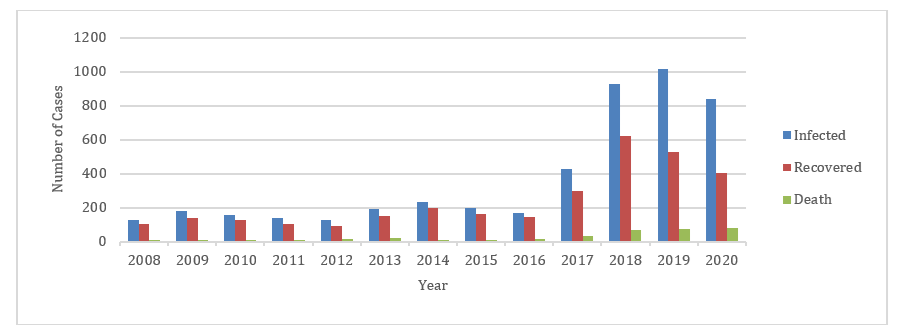
Fig. 1 Fig. 2 Fig. 3 Fig. 4 Fig. 5 Fig. 6 Fig. 7 Fig. 8 Fig. 9 Fig. 10

Tables
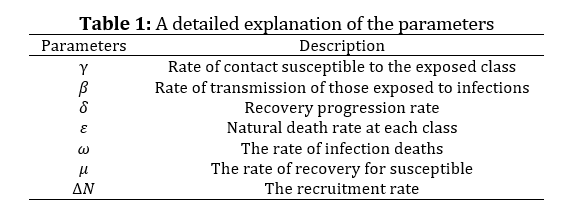
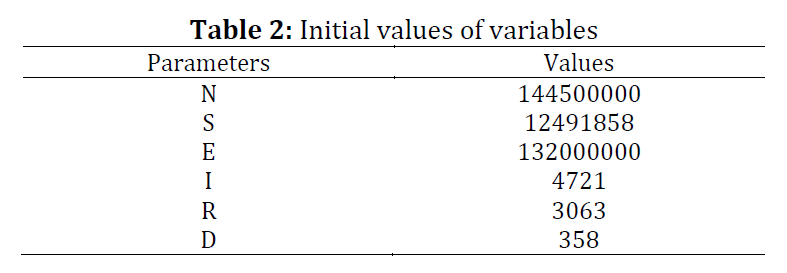
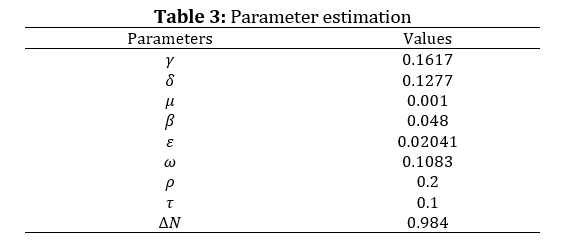
Table 1 Table 2 Table 3 Table 4
----------------------------------------------
References (24)
- Abdelwahab MT, Wasserman S, Brust JC et al. (2020). Clofazimine pharmacokinetics in patients with TB: Dosing implications. Journal of Antimicrobial Chemotherapy, 75(11): 3269-3277. https://doi.org/10.1093/jac/dkaa310 [Google Scholar] PMid:32747933 PMCid:PMC7566350
- Alsayed SS and Gunosewoyo H (2023). Tuberculosis: Pathogenesis, current treatment regimens and new drug targets. International Journal of Molecular Sciences, 24(6): 5202. https://doi.org/10.3390/ijms24065202 [Google Scholar] PMid:36982277 PMCid:PMC10049048
- Anozie EH, Asenuga OO, Sargwak JP et al. (2024). Challenges for mathematical modeling of multidrug-resistant tuberculosis in sub-Saharan Africa. Asian Journal of Advanced Research and Reports, 18(9): 90–97. https://doi.org/10.9734/ajarr/2024/v18i9737 [Google Scholar]
- Barberis I, Bragazzi NL, Galluzzo L, and Martini M (2017). The history of tuberculosis: From the first historical records to the isolation of Koch's bacillus. Journal of Preventive Medicine and Hygiene, 58(1): E9-E12. [Google Scholar]
- Brauer F, van den Driessche P, and Allen LJ (2008). Mathematical epidemiology. 1st Edition, Springer, Berlin, Germany. https://doi.org/10.1007/978-3-540-78911-6 [Google Scholar]
- Cheng J, Sun YN, Zhang CY et al. (2020). Incidence and risk factors of tuberculosis among the elderly population in China: A prospective cohort study. Infectious Diseases of Poverty, 9(1): 64-76. https://doi.org/10.1186/s40249-019-0614-9 [Google Scholar] PMid:32005290 PMCid:PMC6995187
- Das K, Srinivas MN, Shahrear P, Rahman SS, Nahid MM, and Murthy BSN (2023). Transmission dynamics and control of COVID-19: A mathematical modelling study. Journal of Applied Nonlinear Dynamics, 12(2): 405-425. https://doi.org/10.5890/JAND.2023.06.015 [Google Scholar]
- Ershova JV, Volchenkov GV, Kaminski DA et al. (2015). Epidemiology of primary multidrug-resistant tuberculosis, Vladimir Region, Russia. Emerging Infectious Diseases, 21(11): 2048-2051. https://doi.org/10.3201/eid2111.150813 [Google Scholar] PMid:26488585 PMCid:PMC4622259
- Evans D, Hirasen K, Ramushu C et al. (2024). Patient and provider costs of the new BPaL regimen for drug-resistant tuberculosis treatment in South Africa: A cost-effectiveness analysis. PLOS ONE, 19(10): e0309034. https://doi.org/10.1371/journal.pone.0309034 [Google Scholar] PMid:39432463 PMCid:PMC11493257
- Falzon D, Jaramillo E, Schünemann HJ et al. (2011). WHO guidelines for the programmatic management of drug-resistant tuberculosis: 2011 update. European Respiratory Journal, 38(3): 516-528. https://doi.org/10.1183/09031936.00073611 [Google Scholar] PMid:21828024
- Farina E, D’Amore C, Lancella L et al. (2022). Alert sign and symptoms for the early diagnosis of pulmonary tuberculosis: Analysis of patients followed by a tertiary pediatric hospital. Italian Journal of Pediatrics, 48: 90. https://doi.org/10.1186/s13052-022-01288-5 [Google Scholar] PMid:35698090 PMCid:PMC9195307
- Khan MA, Ismail A, Ghafoor A et al. (2024). Experience of piloting BPaLM/BPaL for DR-TB care at selected sites in Pakistan. IJTLD OPEN, 1(11): 508-515. https://doi.org/10.5588/ijtldopen.24.0369 [Google Scholar] PMid:39544887 PMCid:PMC11558782
- Knight GM, McQuaid CF, Dodd PJ, and Houben RM (2019). Global burden of latent multidrug-resistant tuberculosis: Trends and estimates based on mathematical modelling. The Lancet Infectious Diseases, 19(8): 903-912. https://doi.org/10.1016/S1473-3099(19)30307-X [Google Scholar] PMid:31281059
- Kuddus MA, McBryde ES, Adekunle AI, White LJ, and Meehan MT (2022). Mathematical analysis of a two-strain tuberculosis model in Bangladesh. Scientific Reports, 12: 3634. https://doi.org/10.1038/s41598-022-07536-2 [Google Scholar] PMid:35256670 PMCid:PMC8901732
- Kuddus MA, Meehan MT, Sayem MA, and McBryde ES (2021). Scenario analysis for programmatic tuberculosis control in Bangladesh: A mathematical modelling study. Scientific Reports, 11: 4354. https://doi.org/10.1038/s41598-021-83768-y [Google Scholar] PMid:33623132 PMCid:PMC7902856
- Lange C, Aarnoutse RE, Alffenaar JW et al. (2019). Management of patients with multidrug-resistant tuberculosis. The International Journal of Tuberculosis and Lung Disease, 23(6): 645-662. https://doi.org/10.5588/ijtld.18.0622 [Google Scholar] PMid:31315696 PMCid:PMC12190730
- Loddenkemper R and Murray JF (2021). History of tuberculosis. In: Migliori GB and Raviglione MC (Eds.), Essential tuberculosis: 3-9. Springer International Publishing, Cham, Switzerland. https://doi.org/10.1007/978-3-030-66703-0_1 [Google Scholar]
- Mekonen KG, Habtemicheal TG, and Balcha SF (2021). Modeling the effect of contaminated objects for the transmission dynamics of COVID-19 pandemic with self protection behavior changes. Results in Applied Mathematics, 9: 100134. https://doi.org/10.1016/j.rinam.2020.100134 [Google Scholar] PMid:38620308 PMCid:PMC7703270
- Okuonghae D and Omosigho SE (2011). Analysis of a mathematical model for tuberculosis: What could be done to increase case detection. Journal of Theoretical Biology, 269(1): 31-45. https://doi.org/10.1016/j.jtbi.2010.09.044 [Google Scholar] PMid:20937288
- Shahrear P, Rahman SS, and Nahid MMH (2021). Prediction and mathematical analysis of the outbreak of coronavirus (COVID-19) in Bangladesh. Results in Applied Mathematics, 10: 100145. https://doi.org/10.1016/j.rinam.2021.100145 [Google Scholar] PMid:38620615 PMCid:PMC7881714
- Shaman J, Goldstein E, and Lipsitch M (2011). Absolute humidity and pandemic versus epidemic influenza. American Journal of Epidemiology, 173(2): 127-135. https://doi.org/10.1093/aje/kwq347 [Google Scholar] PMid:21081646 PMCid:PMC3011950
- UN (2022). World population prospects 2022. United Nations, New York, USA. [Google Scholar]
- van den Driessche P and Watmough J (2002). Reproduction numbers and sub-threshold endemic equilibria for compartmental models of disease transmission. Mathematical Biosciences, 180(1-2): 29-48. https://doi.org/10.1016/S0025-5564(02)00108-6 [Google Scholar] PMid:12387915
- WHO (2023). Global tuberculosis report 2023. World Health Organization, Geneva, Switzerland. [Google Scholar]