
International
ADVANCED AND APPLIED SCIENCES
EISSN: 2313-3724, Print ISSN: 2313-626X
Frequency: 12


Volume 12, Issue 12 (December 2025), Pages: 100-112

----------------------------------------------
Original Research Paper
Developing an intelligent model for accurate detection of cyber threats in smart logistics networks
Author(s):
Affiliation(s):
1Lincoln University College, Petaling Jaya, Malaysia
2Department of Information Systems and Technology, College of Computer Science and Engineering, University of Jeddah, Jeddah, Saudi Arabia
3Department of Cybersecurity, College of Computer Science and Engineering, University of Jeddah, Jeddah, Saudi Arabia
4Department of Computer Science and Artificial Intelligence, College of Computing, Umm Al-Qura University, Makkah, Saudi Arabia
5Center for Research Impact & Outcome, Chitkara University Institute of Engineering and Technology, Chitkara University, Rajpura, Punjab 140401, India
Full text

* Corresponding Author.
 Corresponding author's ORCID profile: https://orcid.org/0000-0003-3770-432X
Digital Object Identifier (DOI)
https://doi.org/10.21833/ijaas.2025.12.010
Abstract
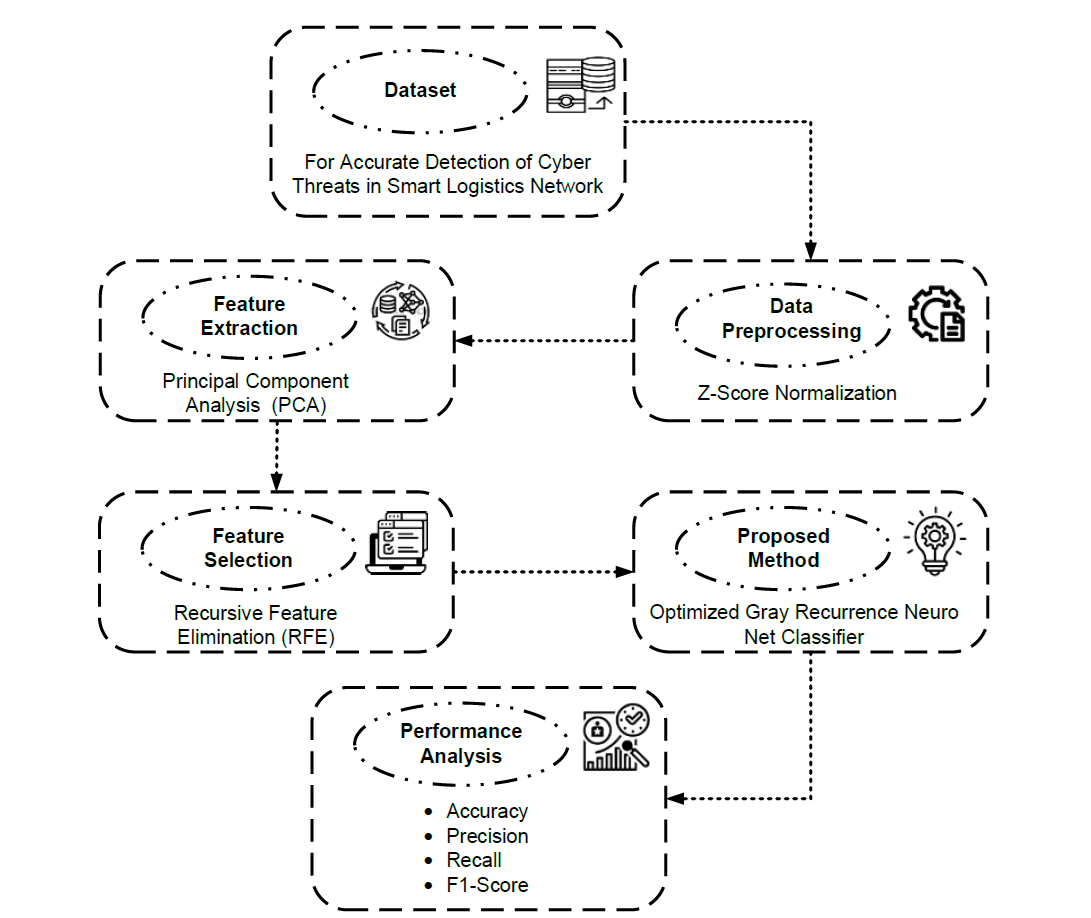
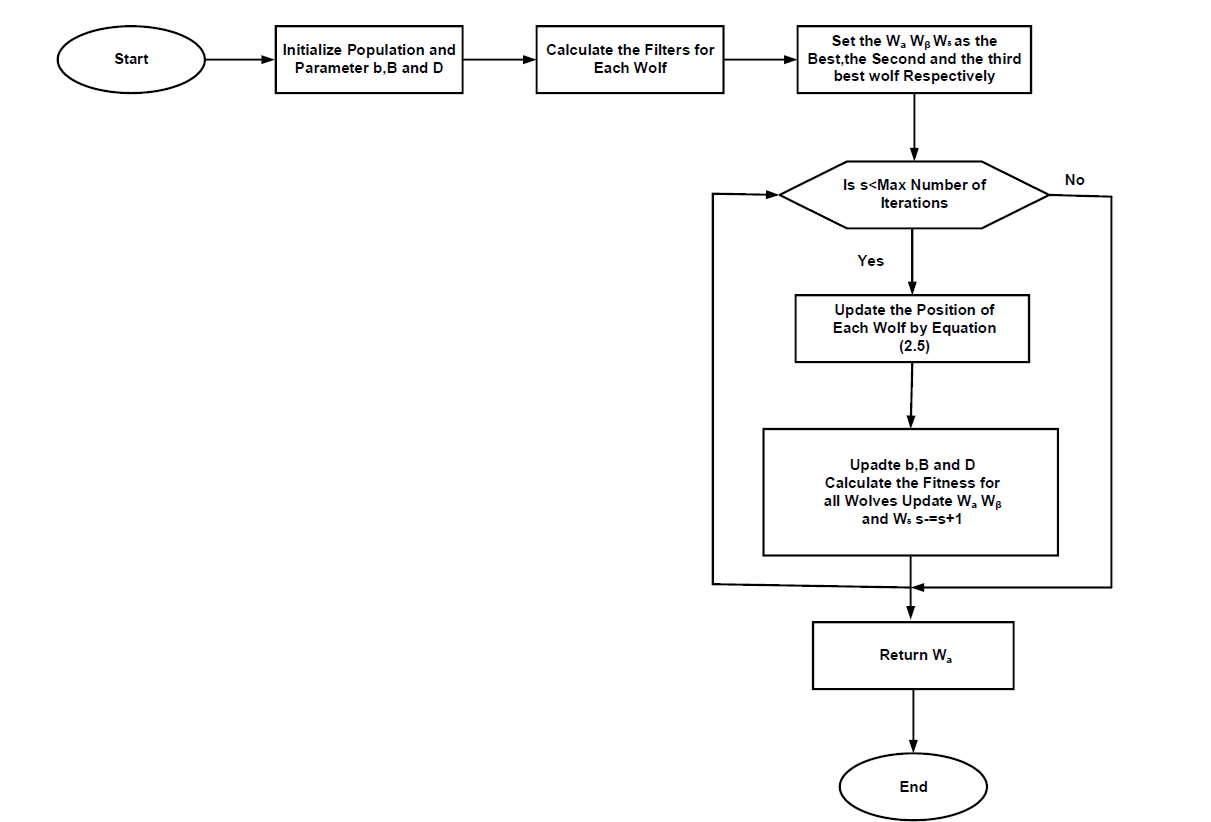
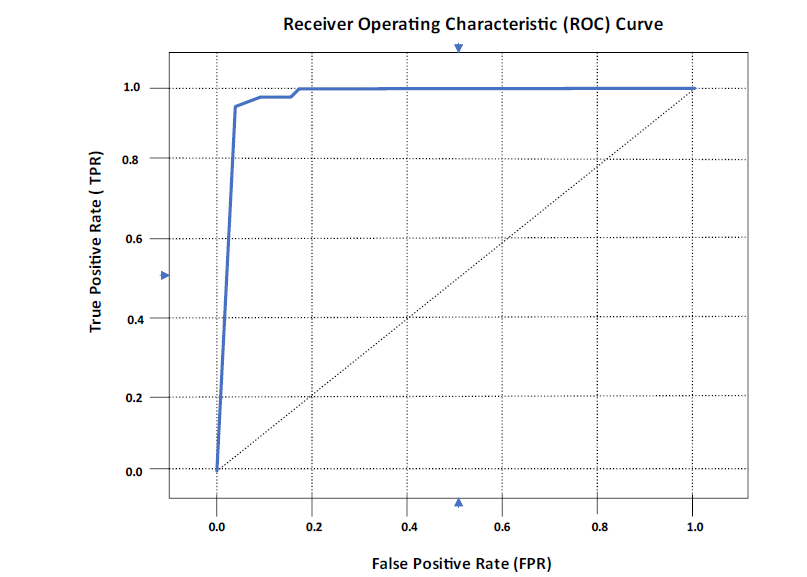
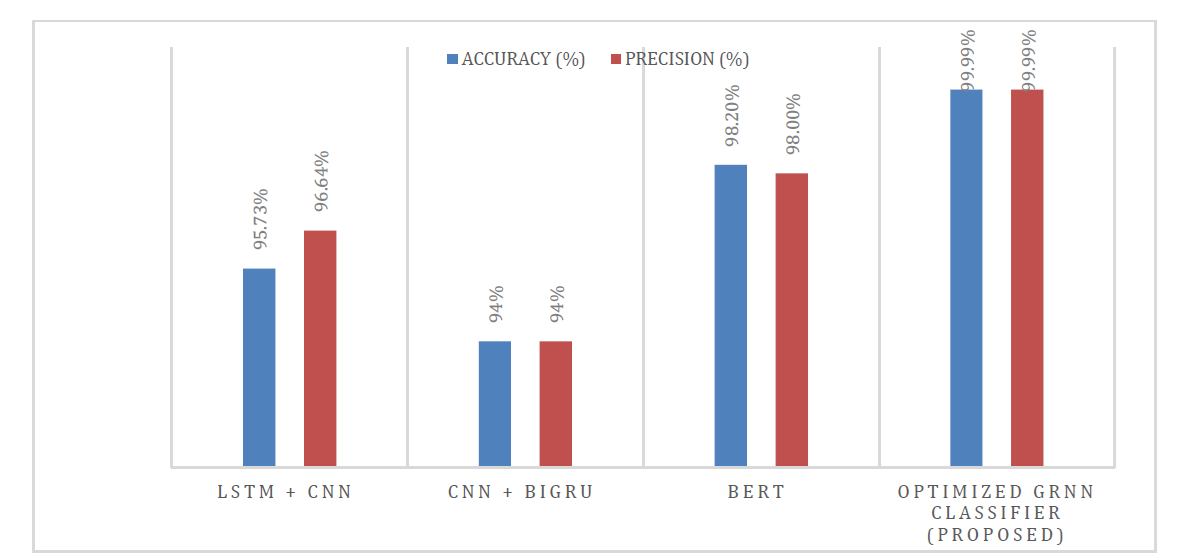
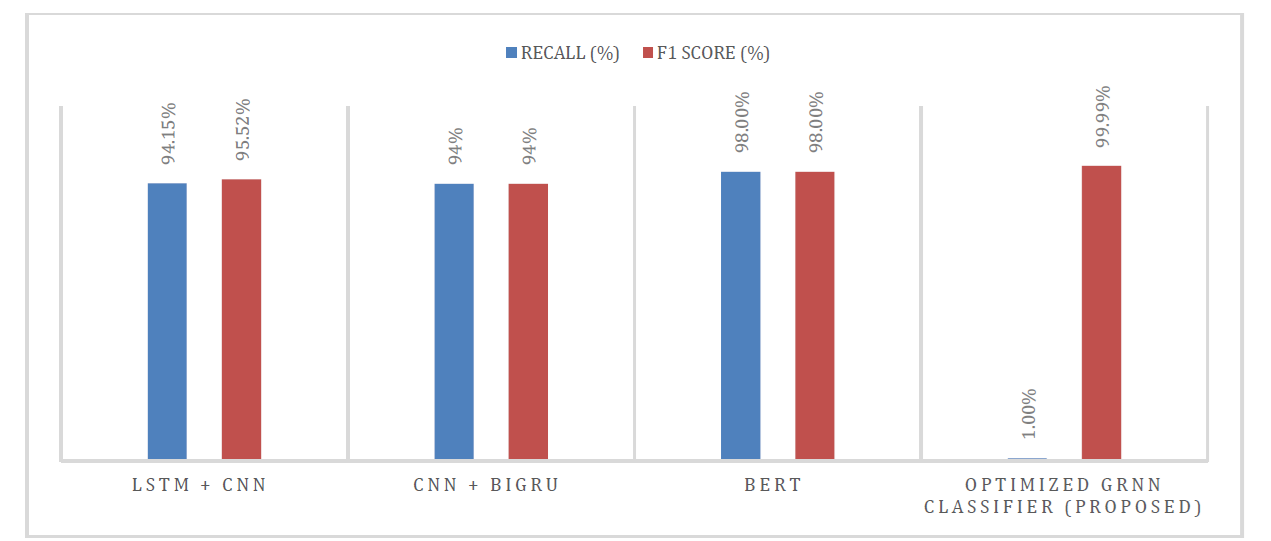
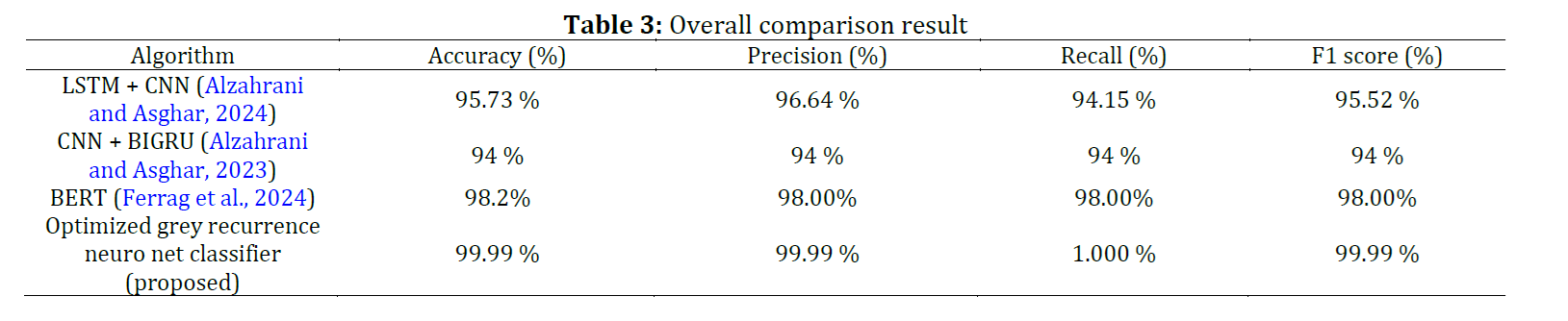
Supply Chain Management in the logistics sector involves coordinating processes, resources, and information to ensure the smooth flow of goods and services from suppliers to end customers. However, smart logistics networks are increasingly exposed to cyber threats such as data breaches, ransomware, and unauthorized access to IoT devices, which can disrupt operations and compromise sensitive data. In this study, the BoT-IoT dataset from the Kaggle platform is used. Data preprocessing is performed using Z-score normalization to standardize the data. Principal Component Analysis (PCA) is applied to reduce dimensionality, while Recursive Feature Elimination (RFE) is used to select the most relevant features. For classification, a novel Optimized Grey Recurrence Neuro Net Classifier is developed, which combines the global search capability of the Grey Wolf Optimizer (GWO) with Recurrent Neural Networks (RNNs) to improve detection performance. The model is implemented using Python tools and libraries. Experimental results show that the proposed method outperforms existing approaches, achieving 99.99% accuracy, 99.99% precision, 100% recall, and a 99.99% F1 score, demonstrating its high effectiveness and efficiency.
© 2025 The Authors. Published by IASE.
This is an
Keywords
Supply chain management, Smart logistics, Cyber threats, Feature selection, Grey recurrence neuro net
Article history
Received 1 July 2025, Received in revised form 4 November 2025, Accepted 19 November 2025
Acknowledgment
No Acknowledgment.
Compliance with ethical standards
Conflict of interest: The author(s) declared no potential conflicts of interest with respect to the research, authorship, and/or publication of this article.
Citation:
Khayyat MM, Tashkandi A, Qashlan A, Gashgari GA, Khayyat MM, and Gupta SK (2025). Developing an intelligent model for accurate detection of cyber threats in smart logistics networks. International Journal of Advanced and Applied Sciences, 12(12): 100-112
Figures
Fig. 1 Fig. 2 Fig. 3 Fig. 4 Fig. 5 Fig. 6 Fig. 7 Fig. 8

Tables
Table 1 Table 2 Table 3 Table 4


----------------------------------------------
References (26)
- Alanazi A, Alqahtani A, Alsubai S, and Bhatia M (2024). IoT-inspired smart theft control framework for logistic industry. IEEE Internet of Things Journal, 11(23): 38327–38336. https://doi.org/10.1109/JIOT.2024.3445884 [Google Scholar]
- Aljabhan B (2023). Economic strategic plans with supply chain risk management (SCRM) for organizational growth and development. Alexandria Engineering Journal, 79: 411-426. https://doi.org/10.1016/j.aej.2023.08.020 [Google Scholar]
- Alrumaih TN, Alenazi MJ, AlSowaygh NA, Humayed AA, and Alablani IA (2023). Cyber resilience in industrial networks: A state of the art, challenges, and future directions. Journal of King Saud University-Computer and Information Sciences, 35(9): 101781. https://doi.org/10.1016/j.jksuci.2023.101781 [Google Scholar]
- Alzahrani A and Asghar MZ (2023). Intelligent risk prediction system in IoT-based supply chain management in logistics sector. Electronics, 12(13): 2760. https://doi.org/10.3390/electronics12132760 [Google Scholar]
- Alzahrani A and Asghar MZ (2024). Cyber vulnerabilities detection system in logistics-based IoT data exchange. Egyptian Informatics Journal, 25: 100448. https://doi.org/10.1016/j.eij.2024.100448 [Google Scholar]
- Ansari AK and Ujjan RMA (2024). Addressing security issues and challenges in smart logistics using smart technologies. In: Shah IA and Jhanjhi NZ (Eds.), Cybersecurity in the transportation industry: 25-48. Wiley, Hoboken, USA. https://doi.org/10.1002/9781394204472.ch2 [Google Scholar] PMid:39496498
- Bhargava A, Bhargava D, Kumar PN, Sajja GS, and Ray S (2022). Industrial IoT and AI implementation in vehicular logistics and supply chain management for vehicle mediated transportation systems. International Journal of System Assurance Engineering and Management, 13(Suppl 1): 673-680. https://doi.org/10.1007/s13198-021-01581-2 [Google Scholar]
- Bravos G, Cabrera AJ, Correa C et al. (2022). Cybersecurity for industrial internet of things: Architecture, models and lessons learned. IEEE Access, 10: 124747-124765. https://doi.org/10.1109/ACCESS.2022.3225074 [Google Scholar]
- Cheung KF, Bell MG, and Bhattacharjya J (2021). Cybersecurity in logistics and supply chain management: An overview and future research directions. Transportation Research Part E: Logistics and Transportation Review, 146: 102217. https://doi.org/10.1016/j.tre.2020.102217 [Google Scholar]
- Enache GI (2023). Logistics security in the era of big data, cloud computing and IoT. Proceedings of the International Conference on Business Excellence, 17(1): 188-199. https://doi.org/10.2478/picbe-2023-0021 [Google Scholar]
- Fatorachian H and Kazemi H (2024). AI-enhanced fault-tolerant control and security in transportation and logistics systems: Addressing physical and cyber threats. Complex Engineering Systems, 4: 17. https://doi.org/10.20517/ces.2024.35 [Google Scholar]
- Ferrag MA, Ndhlovu M, Tihanyi N, Cordeiro LC, Debbah M, Lestable T, and Thandi NS (2024). Revolutionizing cyber threat detection with large language models: A privacy-preserving BERT-based lightweight model for IoT/IIoT devices. IEEE Access, 12: 23733-23750. https://doi.org/10.1109/ACCESS.2024.3363469 [Google Scholar]
- Junejo AK, Breza M, and McCann JA (2023). Threat modeling for communication security of IoT-enabled digital logistics. Sensors, 23(23): 9500. https://doi.org/10.3390/s23239500 [Google Scholar] PMid:38067872 PMCid:PMC10708632
- Kumar P, Gupta GP, and Tripathi R (2021). Toward design of an intelligent cyber attack detection system using hybrid feature reduced approach for IoT networks. Arabian Journal for Science and Engineering, 46: 3749-3778. https://doi.org/10.1007/s13369-020-05181-3 [Google Scholar]
- Manoharan A and Sarker M (2022). Revolutionizing cybersecurity: Unleashing the power of artificial intelligence and machine learning for next-generation threat detection. International Research Journal of Modernization in Engineering Technology and Science, 4(12): 2151-2164. https://doi.org/10.56726/IRJMETS32644 [Google Scholar]
- Nuseir MT, Alquqa EK, Al Shraah A, Alshurideh MT, Al Kurdi B, and Alzoubi HM (2024). Impact of cyber security strategy and integrated strategy on e-logistics performance: An empirical evidence from the UAE petroleum industry. In: Alzoubi HM, Alshurideh MT, and Ghazal TM (Eds.), Cyber security impact on digitalization and business intelligence: Studies in big data: 89-108. Volume 117, Springer, Cham, Switzerland. https://doi.org/10.1007/978-3-031-31801-6_6 [Google Scholar]
- Odimarha AC, Ayodeji SA, and Abaku EA (2024). Securing the digital supply chain: Cybersecurity best practices for logistics and shipping companies. World Journal of Advanced Science and Technology, 5(1): 026-030. https://doi.org/10.53346/wjast.2024.5.1.0030 [Google Scholar]
- Savic M, Lukic M, Danilovic D, Bodroski Z, Bajović D, Mezei I, Vukobratovic D, Skrbic S, and Jakovetić D (2021). Deep learning anomaly detection for cellular IoT with applications in smart logistics. IEEE Access, 9: 59406-59419. https://doi.org/10.1109/ACCESS.2021.3072916 [Google Scholar]
- Shkarupylo V, Alsayaydeh JAJ, Yusof MFB, Oliinyk A, Artemchuk V, and Herawan SG (2024). Exploring the potential network vulnerabilities in the smart manufacturing process of Industry 5.0 via the use of machine learning methods. IEEE Access, 12: 152262-152276. https://doi.org/10.1109/ACCESS.2024.3474861 [Google Scholar]
- Singh N, Lai KH, and Huang GQ (2025). Cyberintelligence for logistics: The promise and challenges of cyber-physical systems. Business Horizons. https://doi.org/10.1016/j.bushor.2025.01.001 [Google Scholar]
- Soare SR and Burton J (2020). Smart cities, cyber warfare and social disorder. In: Stevens T, Ertan A, Floyd K, and Pernik P (Eds.), Cyber threats and NATO 2030: Horizon scanning and analysis: 108-124. NATO Cooperative Cyber Defence Centre of Excellence (CCDCOE), Tallinn, Estonia. [Google Scholar]
- Szymonik A, Szymonik A, Dymyt M, and Wincewicz-Bosy M (2024). Cybersecurity threats and practices in the logistics industry in Poland. European Research Studies Journal, 27(3): 1108-1123. https://doi.org/10.35808/ersj/3855 [Google Scholar]
- Udurume M, Shakhov V, and Koo I (2024). Comparative analysis of deep convolutional neural network: Bidirectional long short-term memory and machine learning methods in intrusion detection systems. Applied Sciences, 14(16): 6967. https://doi.org/10.3390/app14166967 [Google Scholar]
- VanYe CM, Li BE, Koch AT et al. (2021). Trust and security of embedded smart devices in advanced logistics systems. In the Systems and Information Engineering Design Symposium (SIEDS), IEEE, Charlottesville, USA: 1-6. https://doi.org/10.1109/SIEDS52267.2021.9483779 [Google Scholar]
- Zhan J, Dong S, and Hu W (2022). IoE-supported smart logistics network communication with optimization and security. Sustainable Energy Technologies and Assessments, 52: 102052. https://doi.org/10.1016/j.seta.2022.102052 [Google Scholar]
- Zrelli I and Rejeb A (2024). A bibliometric analysis of IoT applications in logistics and supply chain management. Heliyon, 10(16): e36578. https://doi.org/10.1016/j.heliyon.2024.e36578 [Google Scholar] PMid:39262942 PMCid:PMC11388369