
International
ADVANCED AND APPLIED SCIENCES
EISSN: 2313-3724, Print ISSN: 2313-626X
Frequency: 12


Volume 12, Issue 12 (December 2025), Pages: 75-86

----------------------------------------------
Original Research Paper
An automated approach for prostate cancer detection using CGAN data augmentation with a weighted ensemble of transfer learning models
Author(s):
Affiliation(s):
Department of Medical Laboratory Technology (MLT), Faculty of Applied Medical Sciences, King Abdulaziz University, Rabigh, Saudi Arabia
Full text

* Corresponding Author.
 Corresponding author's ORCID profile: https://orcid.org/0000-0001-7696-0452
Digital Object Identifier (DOI)
https://doi.org/10.21833/ijaas.2025.12.008
Abstract
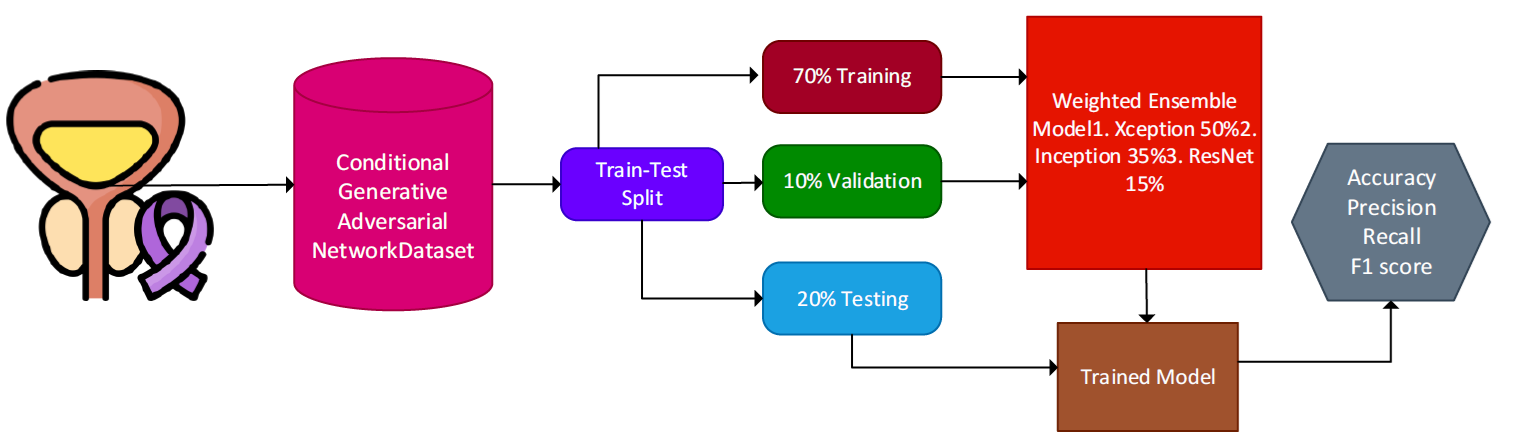
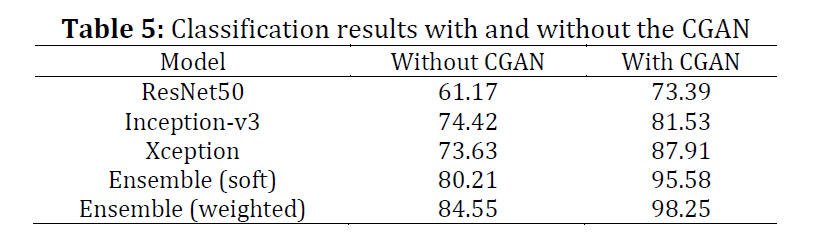
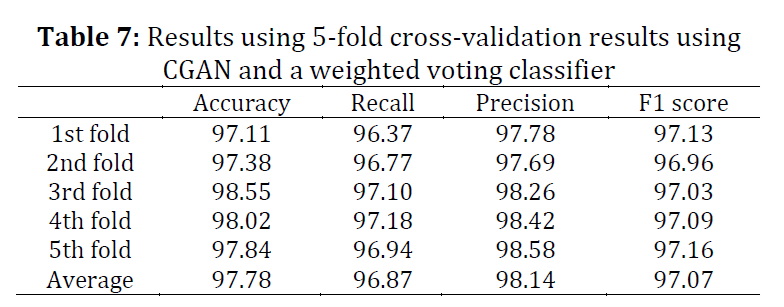
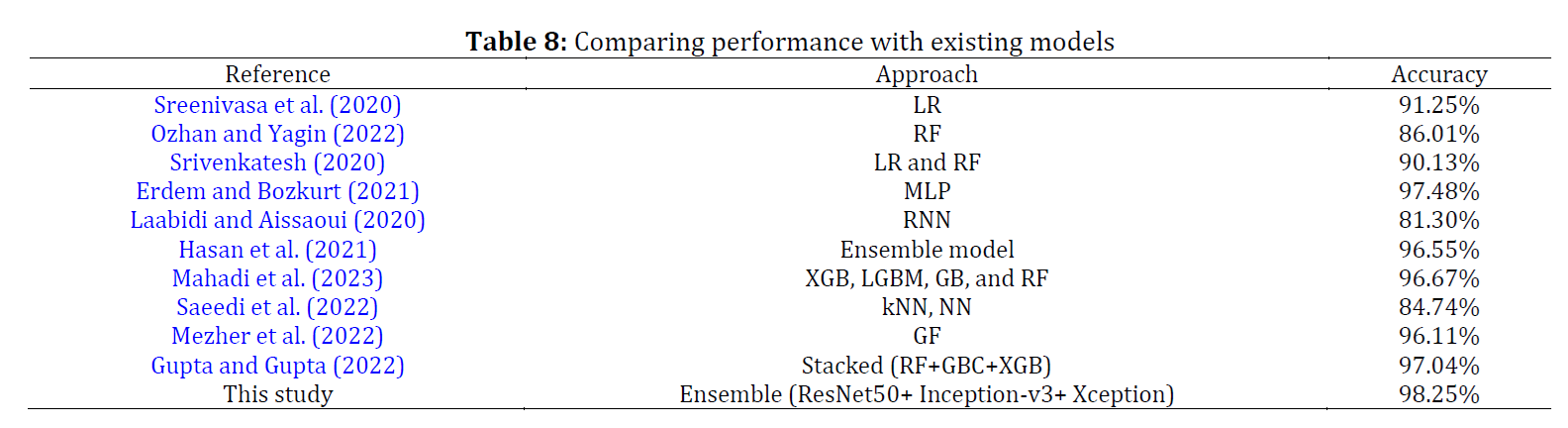
Prostate cancer is one of the most common and lethal cancers among men worldwide, often developing without symptoms or with only minor signs, which makes early detection difficult. This study introduces a novel deep learning framework that integrates a Conditional Generative Adversarial Network (CGAN) with a weighted ensemble model consisting of ResNet (15%), Xception (50%), and Inception (35%). The model was trained and evaluated on the publicly available PROSTATEx image dataset, with performance measured using accuracy, precision, recall, and F1-score. The proposed weighted ensemble achieved 98.25% accuracy, 96.75% precision, 97.58% recall, and 96.65% F1-score, outperforming the soft voting ensemble, which obtained 95% accuracy, 92% precision, 94% recall, and 93% F1-score. Comparative analysis with state-of-the-art methods and cross-validation further confirmed the robustness of the proposed approach. These findings suggest that integrating CGAN with a weighted ensemble significantly enhances prostate cancer detection and holds strong potential for clinical application in early diagnosis and patient management.
© 2025 The Authors. Published by IASE.
This is an
Keywords
Prostate cancer, Deep learning, Generative adversarial network, Ensemble model, Medical imaging
Article history
Received 19 June 2025, Received in revised form 16 October 2025, Accepted 16 November 2025
Funding
This research work was funded by the Institutional Fund Projects under grant no. (IFPIP: 1446-415-1443). The author gratefully acknowledges the technical and financial support provided by the Ministry of Education and King Abdulaziz University, DSR, Jeddah, Saudi Arabia.
Acknowledgment
No Acknowledgment.
Compliance with ethical standards
Ethical considerations
The datasets used in this study (PROSTATEx and the National Cancer Institute prostate MRI dataset) are publicly available and fully anonymized. All patient identifiers were removed by the data providers prior to release. All procedures were performed in accordance with relevant guidelines and regulations.
Conflict of interest: The author(s) declared no potential conflicts of interest with respect to the research, authorship, and/or publication of this article.
Citation:
Munshi RM (2025). An automated approach for prostate cancer detection using CGAN data augmentation with a weighted ensemble of transfer learning models. International Journal of Advanced and Applied Sciences, 12(12): 75-86
Figures
Tables
Table 1 Table 2 Table 3 Table 4 Table 5 Table 6 Table 7 Table 8 Table 9



----------------------------------------------
References (40)
- Abbasi AA, Hussain L, Awan IA, Abbasi I, Majid A, Nadeem MSA, and Chaudhary QA (2020). Detecting prostate cancer using deep learning convolution neural network with transfer learning approach. Cognitive Neurodynamics, 14: 523–533. https://doi.org/10.1007/s11571-020-09587-5 [Google Scholar] PMid:32655715 PMCid:PMC7334337
- Alis D, Onay A, Colak E, Karaarslan E, and Bakir B (2025). A narrative review of artificial intelligence in MRI-guided prostate cancer diagnosis: Addressing key challenges. Diagnostics, 15(11): 1342. https://doi.org/10.3390/diagnostics15111342 [Google Scholar] PMid:40506914 PMCid:PMC12154491
- Aribisala BS and Olabanjo O (2018). Medical image processor and repository – MIPAR. Informatics in Medicine Unlocked, 12: 75–80. https://doi.org/10.1016/j.imu.2018.06.005 [Google Scholar]
- Arita Y, Roest C, Kwee TC et al. (2025). Advancements in artificial intelligence for prostate cancer: Optimizing diagnosis, treatment, and prognostic assessment. Asian Journal of Urology. https://doi.org/10.1016/j.ajur.2024.12.001 [Google Scholar]
- Berish RB, Ali AN, Telmer PG, Ronald JA, and Leong HS (2018). Translational models of prostate cancer bone metastasis. Nature Reviews Urology, 15(7): 403–421. https://doi.org/10.1038/s41585-018-0020-2 [Google Scholar] PMid:29769644
- Chen X, Duan Y, Houthooft R, Schulman J, Sutskever I, and Abbeel P (2016). InfoGAN: Interpretable representation learning by information maximizing generative adversarial nets. In the Proceedings of Advances in Neural Information Processing Systems (NeurIPS), Barcelona, Spain: 2172–2180. [Google Scholar]
- Chornokur G, Dalton K, Borysova ME, and Kumar NB (2011). Disparities at presentation, diagnosis, treatment, and survival in African American men, affected by prostate cancer. Prostate, 71(9): 985–997. https://doi.org/10.1002/pros.21314 [Google Scholar] PMid:21541975 PMCid:PMC3083484
- Erdem E and Bozkurt F (2021). A comparison of various supervised machine learning techniques for prostate cancer prediction. Avrupa Bilim ve Teknoloji Dergisi, 21: 610–620. [Google Scholar]
- Gupta S and Gupta M (2022). A comprehensive data-level investigation of cancer diagnosis on imbalanced data. Computational Intelligence, 38(1): 156–186. https://doi.org/10.1111/coin.12452 [Google Scholar]
- Haque F, Simon BD, Özyörük KB, Harmon SA, and Türkbey B (2025). Generative artificial intelligence in prostate cancer imaging. Balkan Medical Journal, 42(4): 286–300. https://doi.org/10.4274/balkanmedj.galenos.2025.2025-4-69 [Google Scholar] PMid:40619793 PMCid:PMC12240228
- Hasan SM, Rabbi MF, and Jahan N (2021). Can machine learning technique predict the prostate cancer accurately? The fact and remedy. In the International Conference on Electronics, Communications and Information Technology (ICECIT), IEEE, Khulna, Bangladesh: 1-4. https://doi.org/10.1109/ICECIT54077.2021.9641099 [Google Scholar]
- Hjelmborg JB, Scheike T, Holst K et al. (2014). The heritability of prostate cancer in the Nordic Twin Study of Cancer. Cancer Epidemiology, Biomarkers & Prevention, 23(11): 2303–2310. https://doi.org/10.1158/1055-9965.EPI-13-0568 [Google Scholar] PMid:24812039 PMCid:PMC4221420
- Ishioka J, Matsuoka Y, Uehara S et al. (2018). Computer-aided diagnosis of prostate cancer on magnetic resonance imaging using a convolutional neural network algorithm. BJU International, 122(3): 411–417. https://doi.org/10.1111/bju.14397 [Google Scholar] PMid:29772101
- Laabidi A and Aissaoui M (2020). Performance analysis of machine learning classifiers for predicting diabetes and prostate cancer. In the 1st International Conference on Innovative Research in Applied Science, Engineering and Technology (IRASET), IEEE, Meknes, Morocco: 1-6. https://doi.org/10.1109/IRASET48871.2020.9092255 [Google Scholar]
- Litjens G, Debats O, Barentsz J, Karssemeijer N, and Huisman H (2017). SPIE-AAPM PROSTATEx challenge data (Version 2) [dataset]. The Cancer Imaging Archive. https://doi.org/10.7937/K9TCIA.2017.MURS5CL [Google Scholar]
- Mahadi MK, Abir SR, Moon A et al. (2023). Machine learning assisted decision support system for prediction of prostate cancer. In the 20th International Conference on Electrical Engineering/Electronics, Computer, Telecommunications and Information Technology (ECTI-CON), IEEE, Nakhon Phanom, Thailand: 1-5. https://doi.org/10.1109/ECTI-CON58255.2023.10153167 [Google Scholar]
- Mezher MA, Altamimi A, and Altamimi R (2022). An enhanced genetic folding algorithm for prostate and breast cancer detection. PeerJ Computer Science, 8: e1015. https://doi.org/10.7717/peerj-cs.1015 [Google Scholar] PMid:35875638 PMCid:PMC9299265
- Mirza M and Osindero S (2014). Conditional generative adversarial nets. Arxiv Preprint Arxiv:1411.1784. https://doi.org/10.48550/arXiv.1411.1784 [Google Scholar]
- Moradi M, Salcudean SE, Chang SD et al. (2012). Multiparametric MRI maps for detection and grading of dominant prostate tumors. Journal of Magnetic Resonance Imaging, 35(6): 1403–1413. https://doi.org/10.1002/jmri.23540 [Google Scholar] PMid:22267089 PMCid:PMC5478377
- Mujahid M, Rustam F, Álvarez R, Luis Vidal Mazón J, Díez ID, and Ashraf I (2022). Pneumonia classification from X-ray images with Inception-V3 and convolutional neural network. Diagnostics, 12(5): 1280. https://doi.org/10.3390/diagnostics12051280 [Google Scholar] PMid:35626436 PMCid:PMC9140837
- Odena A, Olah C, and Shlens J (2017). Conditional image synthesis with auxiliary classifier GANs. In the Proceedings of the 34th International Conference on Machine Learning, PMLR, Sydney, Australia, 70: 2642–2651. [Google Scholar]
- Ozhan O and Yagin FH (2022). Machine learning approach for classification of prostate cancer based on clinical biomarkers. The Journal of Cognitive Systems, 7(2): 17–20. https://doi.org/10.52876/jcs.1221425 [Google Scholar]
- Pan Z, Yu W, Yi X, Khan A, Yuan F, and Zheng Y (2019). Recent progress on generative adversarial networks (GANs): A survey. IEEE Access, 7: 36322–36333. https://doi.org/10.1109/ACCESS.2019.2905015 [Google Scholar]
- Park JK, Kwon BK, Park JH, and Kang DJ (2016). Machine learning-based imaging system for surface defect inspection. International Journal of Precision Engineering and Manufacturing-Green Technology, 3: 303–310. https://doi.org/10.1007/s40684-016-0039-x [Google Scholar]
- Rawla P (2019). Epidemiology of prostate cancer. World Journal of Oncology, 10(2): 63–89. https://doi.org/10.14740/wjon1191 [Google Scholar] PMid:31068988 PMCid:PMC6497009
- Reda I, Shalaby A, Abou El-Ghar M et al. (2016). A new NMF-autoencoder based CAD system for early diagnosis of prostate cancer. In the IEEE 13th International Symposium on Biomedical Imaging (ISBI), IEEE, Prague, Czech Republic: 1237-1240. https://doi.org/10.1109/ISBI.2016.7493490 [Google Scholar]
- Saeedi S, Maghooli K, Amirazodi S, and Rezayi S (2022). Towards a better diagnosis of prostate cancer: Application of machine learning algorithms. Frontiers in Health Informatics, 11: 116. https://doi.org/10.30699/fhi.v11i1.382 [Google Scholar]
- Salim F, Saeed F, Basurra S, Qasem SN, and Al-Hadhrami T (2023). DenseNet-201 and Xception pre-trained deep learning models for fruit recognition. Electronics, 12(14): 3132. https://doi.org/10.3390/electronics12143132 [Google Scholar]
- Sandhu S, Moore CM, Chiong E, Beltran H, Bristow RG, and Williams SG (2021). Prostate cancer. The Lancet, 398(10305): 1075–1090. https://doi.org/10.1016/S0140-6736(21)00950-8 PMid:34370973
- Sarkar S and Das S (2016). A review of imaging methods for prostate cancer detection: Supplementary issue: Image and video acquisition and processing for clinical applications. Biomedical Engineering and Computational Biology, 7: BECB.S34255. https://doi.org/10.4137/BECB.S34255 [Google Scholar] PMid:26966397 PMCid:PMC4777886
- Siegel RL, Miller KD, and Jemal A (2018). Cancer statistics, 2018. CA: A Cancer Journal for Clinicians, 68(1): 7–30. https://doi.org/10.3322/caac.21442 [Google Scholar] PMid:29313949
- Siegel RL, Miller KD, Wagle NS, and Jemal A (2023). Cancer statistics, 2023. CA: A Cancer Journal for Clinicians, 73(1): 17–48. https://doi.org/10.3322/caac.21763 [Google Scholar] PMid:36633525
- Skowronek J (2017). Current status of brachytherapy in cancer treatment–Short overview. Journal of Contemporary Brachytherapy, 9(6): 581–589. https://doi.org/10.5114/jcb.2017.72607 [Google Scholar] PMid:29441104 PMCid:PMC5808003
- Sreenivasa BC, Agrawal P, Deb S, Shilpa AV, and Raju SNR (2020). Breast cancer and prostate cancer detection using classification algorithms. International Journal of Engineering Research & Technology (IJERT), 9(6): 40–46. https://doi.org/10.17577/IJERTV9IS060085 [Google Scholar]
- Srivenkatesh M (2020). Prediction of prostate cancer using machine learning algorithms. International Journal of Recent Technology and Engineering, 8(5): 5353–5362. https://doi.org/10.35940/ijrte.E6754.018520 [Google Scholar]
- Sung H, Ferlay J, Siegel RL, Laversanne M, Soerjomataram I, Jemal A, and Bray F (2021). Global cancer statistics 2020: GLOBOCAN estimates of incidence and mortality worldwide for 36 cancers in 185 countries. CA: A Cancer Journal for Clinicians, 71(3): 209–249. https://doi.org/10.3322/caac.21660 [Google Scholar] PMid:33538338
- Umer M, Naveed M, Alrowais F et al. (2022). Breast cancer detection using convoluted features and ensemble machine learning algorithm. Cancers, 14(23): 6015. https://doi.org/10.3390/cancers14236015 [Google Scholar] PMid:36497497 PMCid:PMC9737339
- Wang ZY, Xia QM, Yan JW, Xuan SQ, Su JH, and Yang CF (2019). Hyperspectral image classification based on spectral and spatial information using multi-scale ResNet. Applied Sciences, 9(22): 4890. https://doi.org/10.3390/app9224890 [Google Scholar]
- Wasim S, Lee S, and Kim J (2022). Complexities of prostate cancer. International Journal of Molecular Sciences, 23(22): 14257. https://doi.org/10.3390/ijms232214257 [Google Scholar] PMid:36430730 PMCid:PMC9696501
- Yamoah K, Lee KM, Awasthi S et al. (2022). Racial and ethnic disparities in prostate cancer outcomes in the Veterans Affairs health care system. JAMA Network Open, 5(1): e2144027. https://doi.org/10.1001/jamanetworkopen.2021.44027 [Google Scholar] PMid:35040965 PMCid:PMC8767437